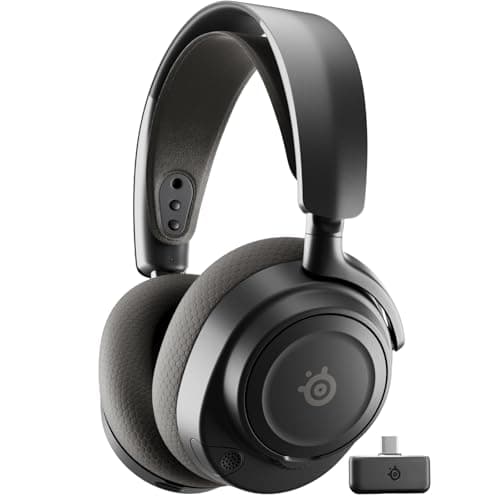
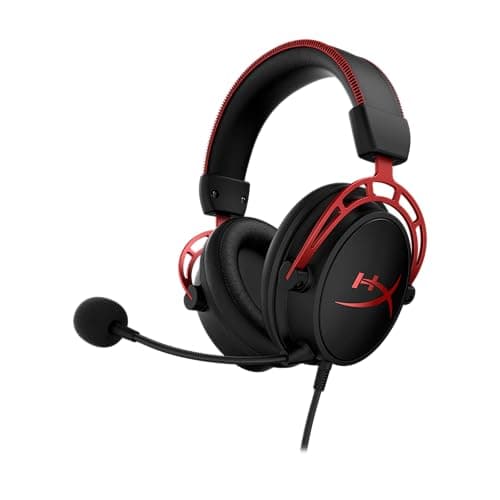
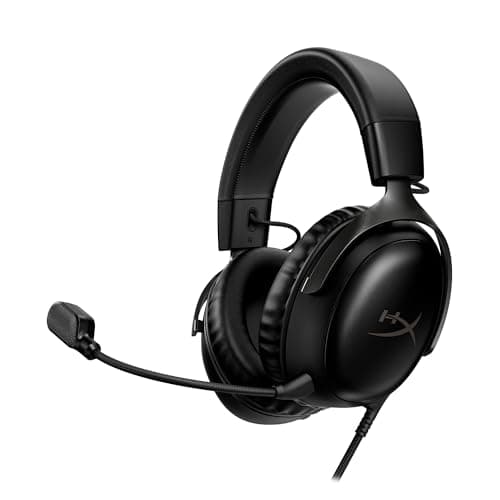
Buy the HyperX Cloud III. Deep memory-foam pads, an earcup opening wide enough that your ear sits inside it rather than under it, and a clamp firm enough to stay put without pressing — that combination is what comfort actually is, and it is the one headset here that gets all three right at once. If you need wireless, the Arctis Nova 7 is its equal and adds a dongle.
“Comfortable” is the least useful word in a headset listing, because every manufacturer uses it and none of them define it. The useful version is that long-session discomfort comes from four specific, separable causes, and a headset can fail on any one of them while being excellent at the other three. Knowing which four lets you read a spec sheet and a pile of owner reviews and predict how a headset will feel in hour four — which is the hour that matters, because nothing is uncomfortable in the first twenty minutes.
The four things that decide comfort
Clamping force. How hard the two cups squeeze your head. Too little and the headset slides when you turn; too much and you get a dull ache above the ears that builds over hours and, for some people, a tension-type headache with it. This is the single most common cause of “I like it but I can only wear it for an hour”, and it is the one thing you can genuinely fix yourself after purchase — see our guide to making a gaming headset more comfortable.
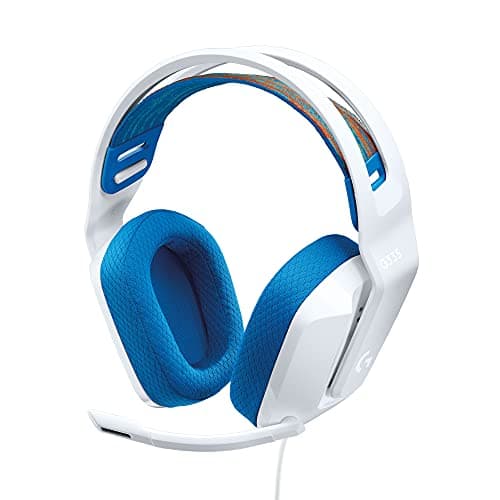
Head weight and how it is carried.Total mass matters, but where it lands matters more. A 300 g headset with a wide, padded band that spreads load across the top of your skull is more comfortable than a 260 g one that concentrates everything on a two-finger strip. A fabric suspension band — the approach the Logitech G335 takes — sidesteps the problem by floating the rigid frame above a flexible sling, so there is no single pressure line at all.
Pad depth and opening size. If the opening in the pad is smaller than your ear, the headset is resting onyour ear rather than around it, and no amount of foam quality saves that. If the pad is shallow, the inside of the cup touches your ear even when the opening clears it. Both produce the specific hot, folded-ear discomfort that people describe as the headset “crushing” their ears. The Cloud line's long-standing advantage is exactly here: wide openings and deep foam.
Heat. Leatherette pads seal better and sound slightly more bassy, and they trap every bit of warmth your head produces. Velour and fabric breathe and leak a little bass. This is a genuine trade, not a quality difference, and which side you want depends mostly on your room temperature. If you game in a warm room, treat fabric or velour as close to a requirement.
Why wireless is now the comfortable option, not the heavy one
For most of the last decade the comfort advice was “buy wired”, because wireless headsets carried a battery, a radio and the extra plastic to house them. That gap has mostly closed. The Arctis Nova 7 on this page is a wireless headset you can wear all evening, and the cable you are not wearing is itself a comfort feature — no tug on the cup when you roll your chair, no three-foot lasso across the desk. If you have been avoiding wireless on comfort grounds, that reasoning has expired. The remaining honest arguments for wired are price, latency certainty and never charging anything, which our wired vs wireless guide covers properly.
Glasses change the answer
If you wear glasses, clamping force stops being one of four factors and becomes the whole decision. The arms of your frames sit directly under the pad, and the pad presses them into your temples; a clamp that is merely firm on a bare head is painful through a pair of glasses within the hour. Softer, thicker pads help because they let the arm sink in instead of pushing back. This is a big enough sub-problem that we gave it its own page — best gaming headsets for glasses ranks on that criterion specifically, and it is the page to read instead of this one if you wear glasses while you play.
Comfort has a sound cost, and we are not going to hide it
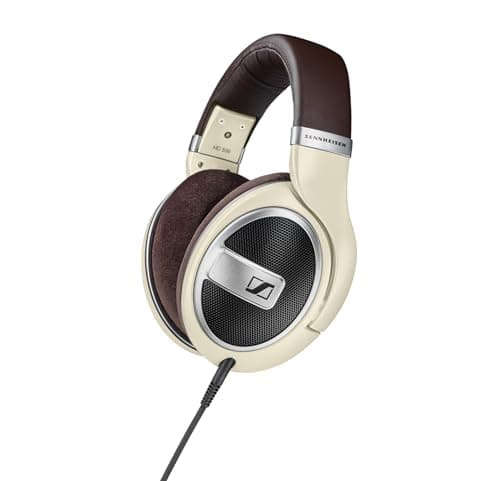
The most comfortable headphone here, by a distance, is the Sennheiser HD 599 — big velour cups, a light clamp, and Sennheiser rates it at 50 Ohm and 106 dB, so it runs from a laptop without an amplifier. It is also the least competitive thing on this page. Its warm tuning puts energy exactly where it buries a quiet footstep, so if you are trying to hear someone walking two rooms away, comfort is not the specification you should be optimizing. Our best gaming headsets for hearing footsteps page ranks the opposite priority, and the honest summary is that the two lists barely overlap. It also has no microphone at all, which is why it is ranked last here despite being the most pleasant thing on the page to wear — most people reading this want to talk to their team.
The same tension shows up a tier down. The G335 is the lightest headset here and its clamp is gentle, which is wonderful on a small head and insufficient on a large one — a loose headset that shifts when you turn your head is its own kind of annoying. Comfort is a fit problem, not a ranking, and the best we can do is tell you which direction each one errs in.
How to choose between these five
If you want one answer and you do not mind a cable, buy the HyperX Cloud III. Deep memory foam, a wide opening and three connection options in the box — USB-C, USB-A and 3.5mm — mean it works on a PC, a console and a handheld without an adapter.
If you want wireless, the Arctis Nova 7 is the pick, and its simultaneous 2.4GHz-plus-Bluetooth trick means game audio and a phone call can coexist without unpairing anything.
If you want the same pads for less, the HyperX Cloud Alphais the older Cloud and still the value benchmark; the Cloud III's angled drivers and thicker pads are a real upgrade but an incremental one. If your main complaint about every headset you have owned is that it felt heavy, the Logitech G335 is the lightest answer here and the cheapest. And if you genuinely do not need a microphone, the Sennheiser HD 599is the most comfortable thing on the page — pair it with a desk mic from our best microphones for gaming page and you have a setup that is more comfortable and sounds better to your team than any headset here.
One last practical note that has nothing to do with the headset: a lot of what gets blamed on a headset is actually desk height. If your monitor sits low enough that you spend the evening looking down, your neck is carrying the headset at a bad angle, and OSHA's workstation guidance on screen height is worth five minutes before you spend money. Our how to set up a gaming monitor guide has the height and distance numbers.