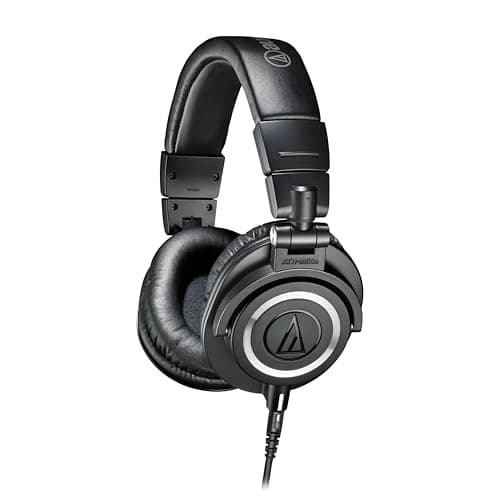
If you want to hear footsteps, buy an open-back headphone and a cheap clip-on microphone. The Philips SHP9500 does this better than gaming headsets costing four times as much, and it has done for a decade.
We are going to lose money on this page and we know it. The expensive wireless flagship at #5 pays a far larger commission than the #1 pick, and we still ranked a decade-old $85 open-back above it — because for this specific job, it is better.
The reason is structural, not a matter of taste. Your brain locates sound using two cues in two frequency bands — timing below roughly 1,500 Hz, loudness above it. A footstep is a broadband transient that needs both bands to arrive intact. The typical gaming headset boosts the bass (smearing the timing cues) and softens the treble (blunting the level cues), while a sealed cup adds internal reflections that muddy the transient further.
An open-back headphone with a neutral tuning does none of those things. That is the whole insight, and it is why this list looks nothing like the others.
The honest caveat, up front: open-back headphones leak. Everyone in the room hears your game, and you hear them. If you share a space, or your room is noisy, an open back is the wrong tool no matter how well it images — and in that case the HyperX Cloud Alpha at #4 is the pick, not the #1.
The short answer
#ad · Live prices from the Amazon Product API, as of Jul 14, 2026. Where we have no verified live price, we show none — we would rather leave a gap than print a number that has rotted.
In detail
Positional audio on a budget
Open back32 OhmOver-earNo microphone
The budget open-back that has been the enthusiast answer for a decade.
- Positional accuracy
- 8
- Footstep clarity
- 8
- Mic quality
- 0
- Comfort
- 8
- Value
- 10
Pros
- +Open back at a fraction of the DT 990's price — the structural advantage without the tax
- +32 Ohm, so it actually runs off a phone, a Deck or a motherboard
- +Detachable cable and a huge, cheap aftermarket of pads and boom mics
Cons
- −No mic — budget a clip-on or a modmic on top
- −Build is plasticky, and it creaks
- −Leaks sound as badly as any open back
Don't buy this if…
…you need a microphone and a single purchase. Add a boom mic and the total creeps toward a proper wireless headset.
Hearing where things are
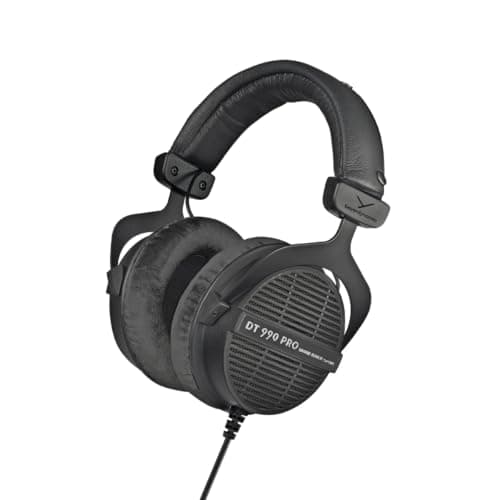
Open back250 OhmOver-earNo microphone
The positional-audio answer, and it isn't a gaming headset at all.
- Positional accuracy
- 9
- Footstep clarity
- 9
- Mic quality
- 0
- Comfort
- 8
- Value
- 8
Pros
- +Open-back design is the single biggest structural advantage for positional audio in this list
- +The treble presence is what makes footsteps and reloads pop out of a mix
- +Velour pads stay comfortable for the length of an actual session
Cons
- −No microphone. You will need a separate one, and that is a real added cost
- −250 Ohm — it wants an amp or a decent DAC, and it will sound thin off a motherboard jack
- −Open backs leak. Everyone in the room hears your game, and you hear them
- −The treble is bright to the point of fatiguing for some people
Don't buy this if…
…you share a room, or you want to plug into a controller and be done. Both of those rule this out completely, and neither is a small caveat.
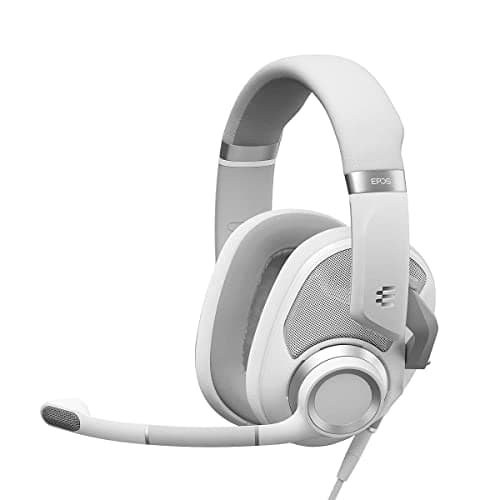
Open-back sound without a second purchase
Open acousticDetachable boom micWired 3.5mmLightweight
The compromise pick: open-back staging with a mic already attached.
- Positional accuracy
- 8
- Footstep clarity
- 8
- Mic quality
- 8
- Comfort
- 7
- Value
- 7
Pros
- +The only genuinely open-back design here that ships with a good microphone
- +The boom mic is a cut above the usual bundled effort
- +Light enough to forget you're wearing it
Cons
- −Costs more than the SHP9500 plus a decent clip-on mic would
- −Still leaks sound like any open back
- −Clamp force is firm out of the box
Don't buy this if…
…you wear glasses. The clamp is firm and it presses the arms into your temples — this is the single most common complaint in the owner reviews.
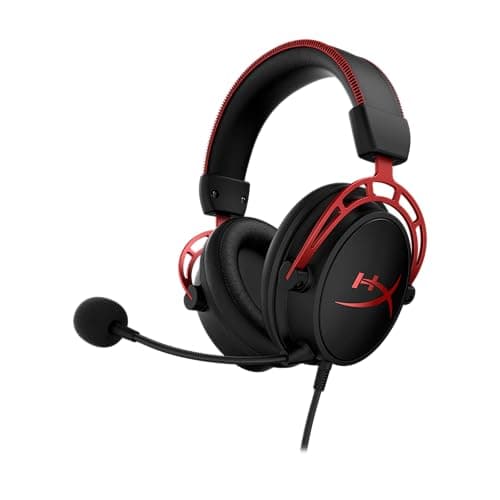
One thing that just works, on everything
Closed backDual-chamber driversDetachable mic3.5mm — works on anything
The default wired gaming headset, and the default for a reason.
- Positional accuracy
- 7
- Footstep clarity
- 7
- Mic quality
- 8
- Comfort
- 9
- Value
- 9
Pros
- +Plugs into a Deck, an Ally, a controller, a phone — no dongle, no software, no drivers
- +The memory-foam pads are the comfort benchmark at this price
- +Genuinely durable — the aluminium frame outlives the plastic competition
Cons
- −Closed back, so the soundstage is narrower than any open-back on this list
- −Bass-forward tuning can mask quiet detail if you don't EQ it
Don't buy this if…
…positional accuracy is the only thing you care about. A closed back is a structural handicap there, and an open-back pair plus a cheap mic beats it for the same money.
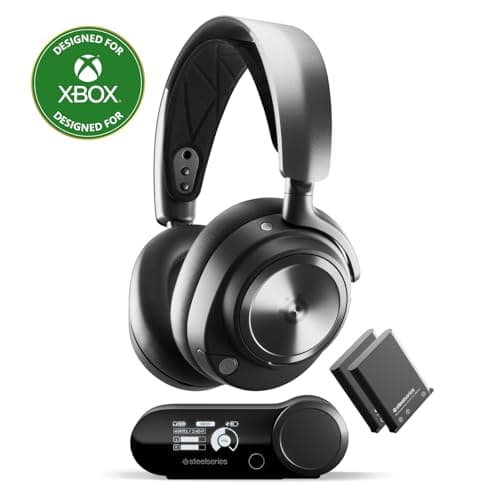
Buy-once, no-compromises wireless
Wireless 2.4GHz + BTHot-swap dual batteryANCBase station with parametric EQ
The one with everything. Whether you need everything is a different question.
- Positional accuracy
- 8
- Footstep clarity
- 7
- Mic quality
- 9
- Comfort
- 9
- Value
- 5
Pros
- +The hot-swap battery system means it is never out of charge — the second cell sits charging in the base
- +The base station's parametric EQ is a real tool, not a marketing slider
- +Simultaneous 2.4GHz and Bluetooth, so game audio and a phone call coexist
Cons
- −Extremely expensive — several times the cost of headsets that get you most of the way
- −Closed back, so it still cannot match an open-back for raw staging
- −The feature list is doing a lot of the selling here
Don't buy this if…
…you're buying it to hear footsteps better. A $90 open-back will out-locate this, and we'd rather lose the sale than let you spend four times as much for worse imaging.
One pair for gaming and music
Closed back38 OhmDetachable cableNo microphone
A studio monitor that got adopted by gamers. Closed, accurate, no mic.
- Positional accuracy
- 6
- Footstep clarity
- 6
- Mic quality
- 0
- Comfort
- 7
- Value
- 7
Pros
- +Genuinely good at everything — the rare headphone that does games and music equally well
- +Closed back, so it doesn't leak and doesn't annoy the room
- +Built to survive a decade of studio abuse
Cons
- −No mic
- −Closed back with a fairly narrow stage — not a positional-audio specialist
- −Clamps hard for the first month
Don't buy this if…
…you want the best footstep audio for the money. This is a great headphone that is merely fine at the one job this page is about.
How to buy for positional audio
Open back beats closed back, structurally
A sealed earcup reflects sound back at your ear, blurring the transient edges your brain reads for direction. An open back lets that energy escape. This is a bigger difference than the gap between most individual headsets — it is a design choice, not a tuning tweak.
Flat beats exciting
The bass boost that makes explosions feel cinematic is the same bass boost that masks a quiet footstep. You cannot have both. Every "gaming" tuning is a decision to prioritise the explosion, and for competitive play that is the wrong decision.
Budget for a microphone separately
The best positional headphones have no mic. A clip-on or a modmic is a small extra cost and gets you a better-sounding voice than most bundled boom arms anyway. Factor it in when you compare prices — a $85 headphone plus a $25 mic is still less than most gaming headsets.
Impedance is a real trap
The beyerdynamic DT 990 PRO comes in a 250-Ohm version, and it will sound thin and quiet out of a motherboard jack or a Steam Deck. It wants an amp. The 32-Ohm SHP9500 does not. If you have no DAC or amp and no plans to buy one, that fact alone reorders this list.
Do not buy a headset to fix a settings problem
Turning the in-game bass down, disabling "enhancements" in Windows, and lowering the master volume are all free, and together they do more for most people than a new headset does. Try them before you spend anything.
How we picked
We researched published specifications, third-party lab measurements, manufacturer documentation and aggregated owner reviews, then scored each product against a published rubric. The scores are judgements from documented research — they are notmeasurements we took, because we do not have a lab and we are not going to pretend we do. Where a number came from someone else's lab, we name them and link them in Sources.
Questions
What is the best headset for hearing footsteps?+
For pure positional accuracy, an open-back headphone with a neutral tuning — the Philips SHP9500 is the value pick and the beyerdynamic DT 990 PRO the upgrade. Both need a separate microphone. If you need a built-in mic and a closed design, the EPOS H6PRO is the best compromise here.
Do expensive gaming headsets hear footsteps better?+
Frequently not. Price in gaming headsets buys wireless, battery life, microphone quality and features — not positional accuracy. The $350 wireless flagship on this page images worse than the $85 open-back at the top of it, and we ranked them accordingly even though the expensive one pays us more.
Are open-back headphones worth it for gaming?+
For competitive play, yes — the imaging advantage is structural. But they leak sound in both directions, so they are genuinely unsuitable if you share a room or play somewhere noisy. That is not a minor caveat, and anyone who tells you otherwise has not tried it in a shared flat.
Do I need a DAC or amp for gaming headphones?+
Only for high-impedance models. The 250-Ohm beyerdynamic DT 990 PRO genuinely needs one and will disappoint without it. The 32-Ohm Philips SHP9500 runs happily from a motherboard, a phone or a Steam Deck.
Receipts
We do not run a testing lab, and we do not pretend to. Where a measured number came from someone else's lab, we name them and link them. Where we could not verify something, we say so on the page rather than quietly leaving it out. Read our full method.