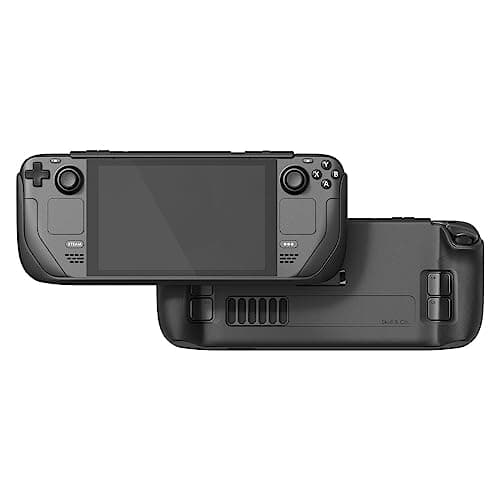
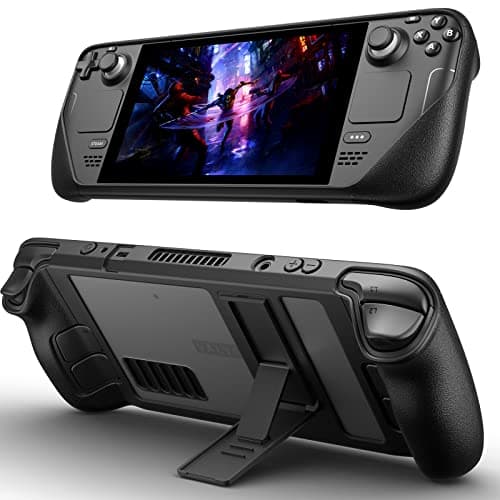
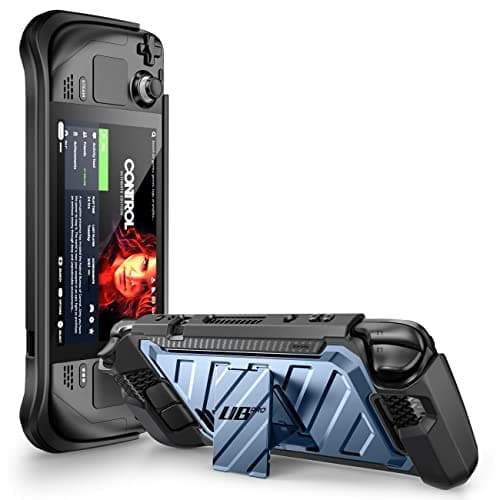
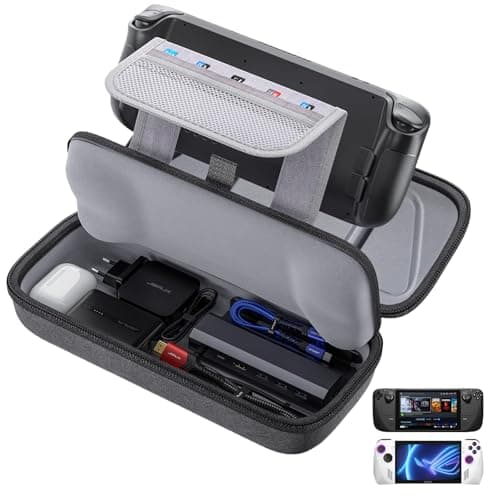
"Steam Deck case" means two completely different products. A carrying case is a hard shell that protects the Deck in a bag. A grip case stays on the Deck while you play. They solve opposite problems, they are frequently not compatible with each other, and the listings do almost nothing to distinguish them.
Work out which you need before you look at a single product:
- The Deck lives at home and your hands hurt after an hour → you want a grip case. The Deck's back is flat and its weight is real; a grip fixes the ergonomics.
- The Deck goes in a backpack → you want a carrying case. Valve includes one, and it is decent; buy an aftermarket one only if you need space for a dock and cables too.
- Both → check that the carry case is deep enough to close over the grip case. Most are not. This is the single most common complaint in this category and it is entirely avoidable.
Choosing between them
LCD or OLED — check, every time
The two Steam Deck models are close in size but not identical, and a case cut for the 2022 LCD may not close properly on an OLED. Several listings are still written for the LCD. Confirm the model before you buy; this is the failure mode we see most.
Grip cases add bulk, and bulk has consequences
A grip case makes the Deck thicker. That is the point — it is filling your palm. It also means it may no longer fit the case Valve gave you, or the dock cradle you just bought. Measure before you stack accessories.
Kickstands are a hinge, and hinges break
A kickstand case is genuinely useful if you play at a table with a separate controller. If you never do that, you are adding the one moving part most likely to fail, for a feature you will not use.
You may already own the case you need
Every Steam Deck ships with a carrying case in the box. If it is still in a cupboard, and you only carry the Deck bare, the correct amount to spend in this category is zero.