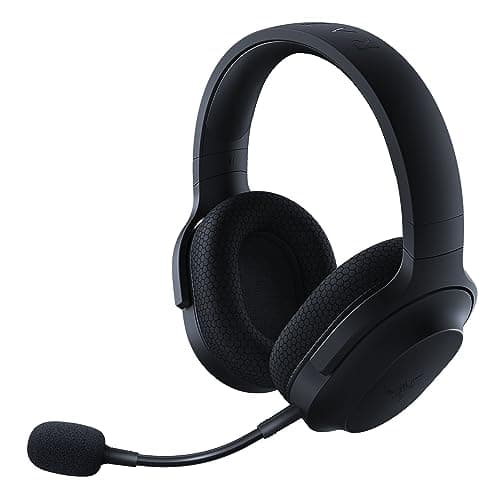
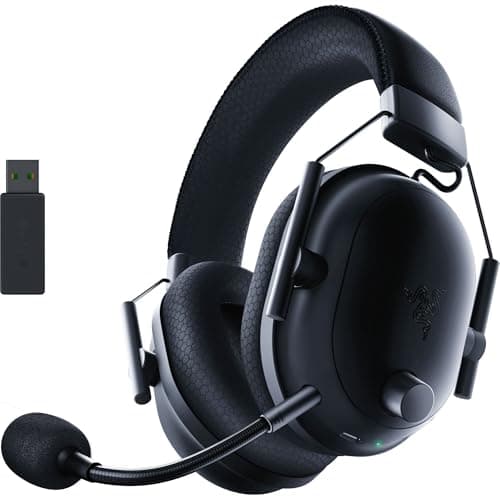
Buy the Razer BlackShark V2 Pro. It is wireless, it is tuned hard for competitive shooters in exactly the mid-treble band where footsteps and reloads live, and its super-wideband microphone is the best-sounding wireless gaming mic we found anywhere near this budget. If you want one headset that does everything rather than one that wins one job, the SteelSeries Arctis Nova 7 is the wireless all-rounder most people should actually buy, and the HyperX Cloud Alpha is the wired default that plugs into literally everything you own.
“Under $200” is a deceptive way to frame a headset page, because it is not a single market. It stretches from a roughly $30 wired staple that is the cheapest thing here worth owning, all the way up to a near-$200 wireless flagship. Those are not the same product with a bigger price tag. They are four different rungs of a ladder, and the money between them buys specific, nameable things: wireless freedom, a better microphone, and a small amount of extra positional accuracy. This page is about which of those you are actually paying for at each step, and the point at which spending more stops changing anything you will notice in a game.
What each extra tier of spend actually buys
Start at the bottom and walk up, because the jumps are not evenly sized. The first thirty-odd dollars gets you a real headset with memory foam and a working mic instead of a toy. The next step buys you a better-sounding, better-built wired headset. The step after that buys you wireless. And the final step, at the top of the budget, buys you a genuinely excellent microphone and a tuning aimed squarely at competitive play. Each rung is a real upgrade over the last, but the size of the upgrade shrinks as the price climbs, and the smartest purchase is the one that stops on the rung where your needs are met.
- Positional accuracy and footstep clarity. This is the reason competitive players buy a headset at all, and it is the one thing that barely moves across this whole page. Every headset here is closed-back, which puts a structural ceiling on soundstage. The BlackShark earns its place not by having a wider stage but by an aggressive tuning that lifts the exact frequencies where a distant footstep or a reload lives. If pure imaging is the entire point for you, an open-back headphone will out-locate any of these, and our footsteps roundup makes that case in full.
- Microphone quality.This is where the top of the budget separates itself. The BlackShark's super-wideband mic is a real, audible step above the rest; the Cloud Alpha and Arctis Nova 7 have very good detachable and retractable mics; and by the time you reach the bottom of the page the mic on the Cloud Stinger 2 is merely fine and no longer detachable.
- Comfort. The spec you notice on hour three of a session, long after you have stopped hearing the frequency response. The Arctis Nova 7 and Cloud Alpha are the comfort benchmarks here; the Corsair HS55 Surround v2 wins on sheer lightness.
- Wired versus wireless. The single biggest fork on this page, and the one that decides how much you spend. It gets its own section below, and its own dedicated guide.
- Value.Not “cheapest” -- the rung where the money you spend maps cleanly onto something you will actually use. For a lot of people that rung is the wired Cloud Alpha, not the wireless flagship above it.
The wired-versus-wireless fork decides your budget
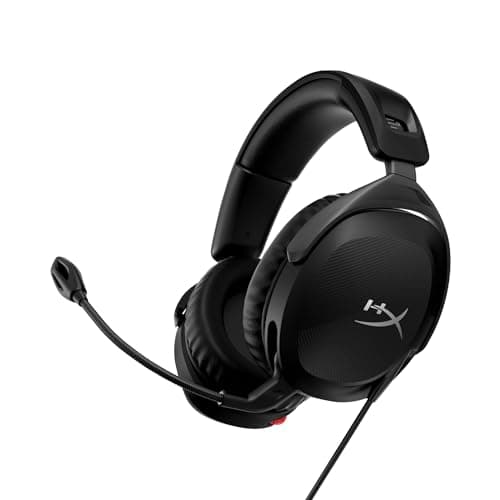
Everything on this page splits into two camps, and which camp you are in sets your price before you compare a single other spec. The wired headsets -- the Cloud Alpha, the Corsair HS55 Surround v2, the Cloud Stinger 2 -- share one enormous, under-rated advantage: a plain 3.5mm jack works with a PC, a PS5 or Xbox controller, a Switch, a Steam Deck, an ROG Ally and a phone, with no dongle, no software and no battery to die mid-match. That flexibility is worth real money, and it is why a wired headset can be the right answer even when your budget would stretch to wireless.
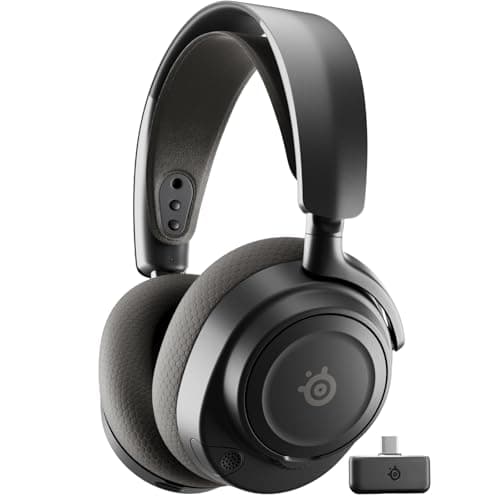
The wireless headsets -- the BlackShark V2 Pro, the Arctis Nova 7, the Barracuda X -- charge a premium for cutting the cable, and each makes a small trade to get there. The BlackShark spends its premium on tuning and a class-leading mic. The Nova 7 spends it on a rare simultaneous 2.4GHz plus Bluetooth connection, so game audio and a phone call can coexist. The Barracuda X spends it on a USB-C dongle that plugs straight into a handheld. None of them gives you wireless for free; there is always a corner being cut somewhere, and the honest version of this page tells you where.
Where each pick sits, briefly
The BlackShark V2 Pro wins because it is the most complete competitive tool here: wireless, the best mic on the page, and a tuning built for the job. Its honest cost is that the same tuning makes music and cinematic audio sound thin -- it is a specialist, and if this is your only pair of headphones you will feel that. The Arctis Nova 7 is the better choice for most people who are not chasing a competitive edge, because it does the important ninety percent of a far pricier flagship, with the best all-round comfort here; its one real omission is a hot-swap battery, so a flat headset means reaching for a cable. The Barracuda X is a narrow but brilliant recommendation: if your main machine is a Steam Deck, an Ally or a Switch, its USB-C dongle is the cleanest low-latency wireless audio a handheld can get, though the dongle sticks out and is easy to snap in a bag, and on a desktop the Nova 7 simply beats it.
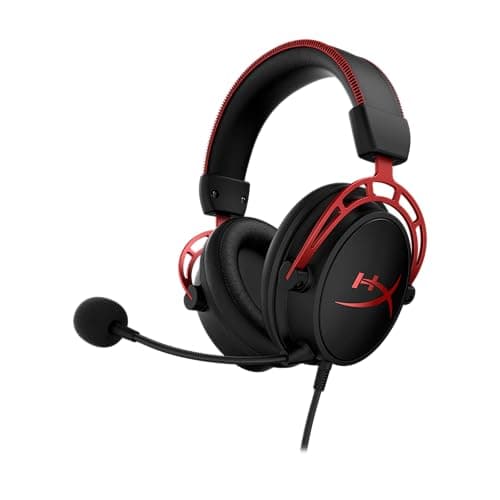
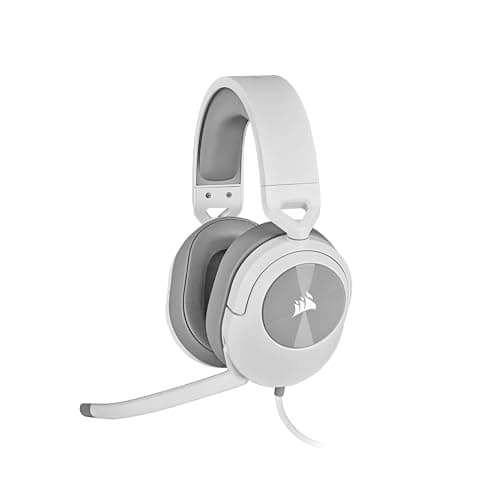
The Cloud Alpha has been the default wired answer for years for good reason: an aluminum frame that outlives the plastic competition, the comfort benchmark memory-foam pads, a good detachable mic, and that go-anywhere 3.5mm jack. The Corsair HS55 Surround v2 sits alongside it as the lighter no-nonsense option and puts a USB adapter for Dolby 7.1 surround in the box, at the cost of a microphone that only flips up to mute instead of coming off. And the Cloud Stinger 2 is the floor -- astonishingly cheap for a headset with real memory foam and a working swivel-to-mute mic, but with flat, loose-bass sound and a mic that is fixed in place. Below it you are buying a toy; at it, you are buying the cheapest thing here we would put our name to.
How to choose your rung on the ladder
Decide wired or wireless first -- it sets everything else
This is the decision that fixes your budget, so make it before you compare sound or mics. If you move between a desk, a couch and a handheld, or you simply hate cable drag, wireless is worth the premium and you are shopping the top half of this page. If you play at one desk, or you want a headset that also works on a console controller, a Switch and a phone with zero fuss, a wired 3.5mm headset is not a compromise -- it is often the smarter buy, and it leaves money on the table for something else. Our wired-versus-wireless guide walks through the latency and battery questions in detail, and our wireless roundup covers the picks above this budget if you decide to go cordless.
Buy the microphone tier you owe your teammates
A headset mic is the part budget designs are most honest about, and it scales cleanly with price here. If people rely on hearing you clearly -- ranked comms, streaming, a job where you are on calls -- the BlackShark's super-wideband mic is a real, audible reason to reach the top of the budget, and it is the closest a headset mic gets to a standalone one. If comms are casual, the detachable mics on the Cloud Alpha and the retractable one on the Nova 7 are more than good enough, and you can spend the difference elsewhere. Only the Cloud Stinger 2 at the very bottom has a mic you cannot remove, which matters if you also want to wear the headset out of the house.
Comfort is the spec you feel on hour three
You will forget the frequency response within a week and notice a hot, heavy or hard-clamping headset every single session. Clamp force, weight and pad material decide whether you still own the thing in a year. The Arctis Nova 7 and Cloud Alpha lead here on plush pads and even weight distribution; the Corsair HS55 Surround v2 wins on outright lightness, which is its own kind of comfort. If you wear glasses, weight the softer, moderate-clamp designs even more heavily -- a firm clamp presses the arms of your glasses into your temples and turns a good headset into an hour-long headache.
Do not overpay for positional accuracy from a closed back
Every headset on this page is closed-back, and closed backs share a soundstage ceiling no amount of money removes. Spending up from the Cloud Alpha to the BlackShark buys you tuning that emphasizes the right cues and a better mic -- it does not buy you a fundamentally wider stage. If hearing a flanking footstep before it is on top of you is the entire reason you are shopping, the honest move is not to spend more here; it is to read our footsteps page, where an open-back headphone plus a cheap standalone mic beats every closed-back on this list for imaging, often for less money. We would rather lose the sale than let you pay a wireless premium for worse positioning.
Know when to stop climbing
The most expensive mistake in this category is buying a rung higher than your needs. If you play competitive shooters and talk to teammates, the top rung -- the BlackShark -- is genuinely worth it. If you want a comfortable, do-everything wireless headset, stop at the Nova 7 and pocket the difference. If you play at a desk and value flexibility, stop at the wired Cloud Alpha and you have spent your money as well as anyone on this page. And if the budget is genuinely tight, the Cloud Stinger 2 is a real headset, not a punishment. There is no prize for reaching the top of a budget you did not need to.
What not to pay for
Virtual surround sold as a hardware feature (it is software, and it is free on your PC). RGB on the earcups you cannot see while wearing them. Driver-diameter numbers, which tell you nothing about how a headset is tuned. Any headset that leans on a huge frequency-response range in its marketing instead of telling you what it is good at. For where this budget overlaps the value sweet spot, our under-$100 headset page makes the case that the most sensible money in the whole category is spent below the flagship tier, not at it.