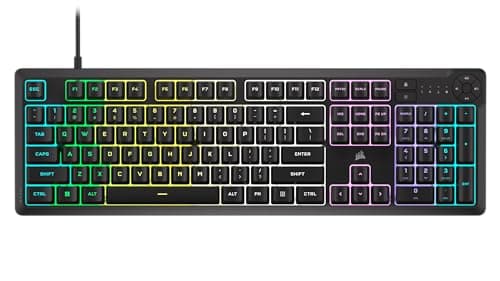
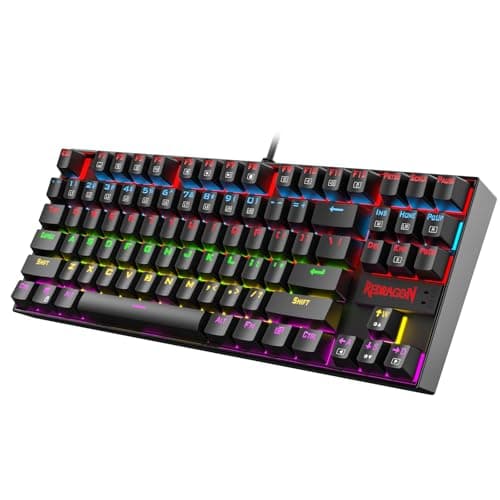
Top pick · Best Keyboard Under $50
The default budget mechanical, and it earned that. A metal-framed TKL that costs less than a nice dinner.
Price as of October 21, 2026. Prices change — Amazon's is the one that counts. #ad · we may earn a commission from this link to Redragon K552 Kumara
Buy the Redragon K552 Kumara. It is a genuine mechanical keyboard with a steel top plate and a tenkeyless layout that keeps the arrow keys and function row, and it routinely sells for less than the cost of a single new game. If you would rather have an upgrade path than a numpad, the hot-swap Redragon K617 Fizz lets you change the switches without a soldering iron.
The thing $50 no longer buys you: an excuse
A few years ago, "gaming keyboard under $50" meant a membrane board with RGB printed on the box and mush under every key. That is no longer the market. Today the same budget buys a real mechanical keyboard — steel-plated, with actual switches that click or bump or glide — and in a couple of cases it buys hot-swap sockets or triple-mode wireless on top. The floor moved, and most buying advice has not caught up with it.
So the decision at this price is not "can I afford mechanical?" You can. The decision is which compromise you are willing to make, because every board here makes exactly one, and they are not the same compromise.
Layout is the decision. Everything else is a detail.
The single biggest difference between the keyboards on this page is not the switch or the backlight — it is how many keys they have. That sounds obvious and it is the thing people get wrong most often, because a 60% board looks like a bargain until the first time you reach for an arrow key that is not there.
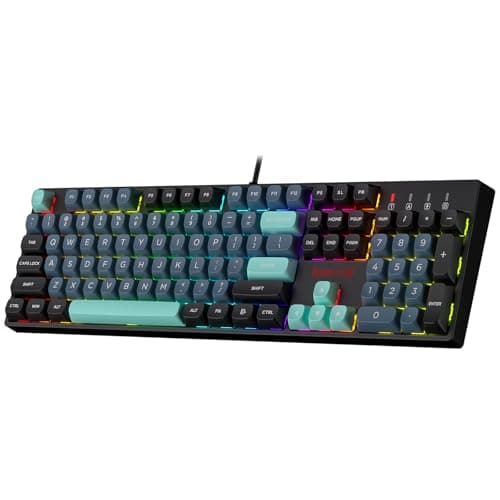
- Full-size (104 keys). Everything, including the number pad. The Redragon K582 SE is the only board here with one. If you use the same keyboard for a spreadsheet, for accounting, or for a dense MMO keybind sheet, this is the layout — and it is the wrong one if you play low-sensitivity shooters, because the numpad pushes your mouse hand out to the right.
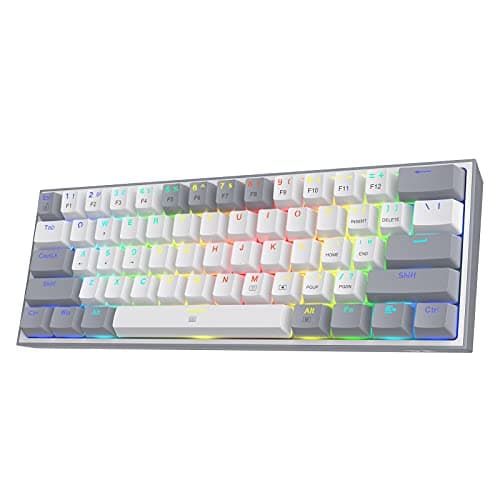
- Tenkeyless / TKL (87 keys). Drops the number pad, keeps the arrows and the function row. This is the sensible default for most people, and it is why the K552 wins this page. You free up mouse space without giving up any key you reach for by reflex.
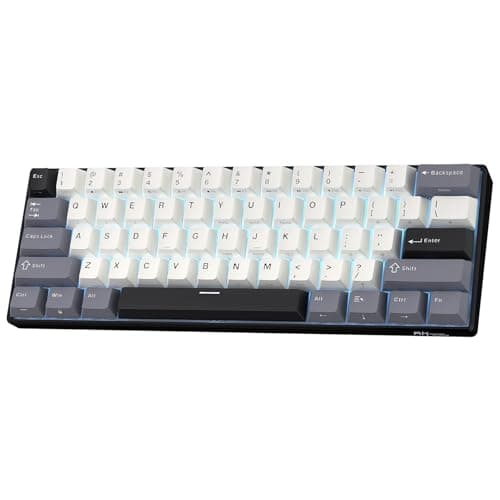
- 60% (61 keys). Drops the numpad, the arrows, the function row and the navigation cluster onto a hidden Fn layer. The Fizz and the wireless RK61 are both 60%. In a game it is liberating — the desk is enormous. In a spreadsheet it is a genuine daily irritation. Do not buy a 60% board if the same computer does your work.
Mechanical vs membrane, honestly
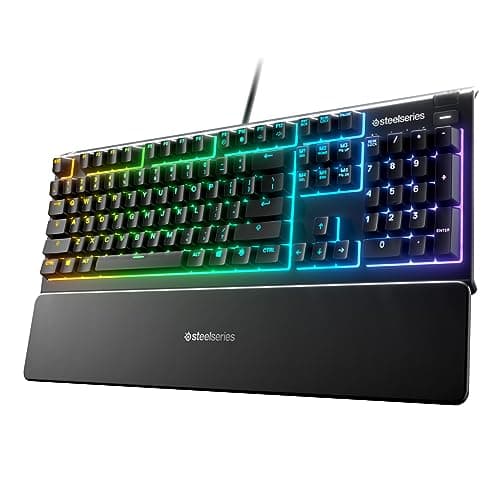
Two boards here — the SteelSeries Apex 3 and the Corsair K55 CORE — are membrane, not mechanical. We are not going to sneer at them. They are quiet, they are spill-resistant, and if you take calls at the same desk you game at, the near-silence is a real feature the mechanical boards cannot match.
But be clear about the trade. Membrane switches feel mushy, they have no crisp actuation point, and the moment you type on a good mechanical you will not want to go back. If there is any chance you will come to care about how the keyboard feels, spend the same money on mechanical the first time and skip the upgrade.
Hot-swap: the feature that turns a cheap board into a keeper
On our under-$100 list we make the case at length that hot-swap sockets change the math, because they turn a keyboard from a product into a platform. That argument holds even harder down here. On a budget board, the stock switches and stabilizers are always the weakest part — and hot-swap means you can fix exactly that part for a few dollars instead of replacing the whole keyboard.
The Fizz and the RK61 both have it. The K552, the K582 and the two membrane boards do not: their switches are soldered down, so what you buy is what you keep. That is not a dealbreaker — a soldered K552 will outlast most people's interest in it — but if you already suspect you are the tinkering type, buy into hot-swap now and save yourself the second purchase.
The short answer
#ad · Live prices from the Amazon Creators API, as of October 21, 2026. Where we have no verified live price, we show none — we would rather leave a gap than print a number that has rotted.
In detail
Most people's first mechanical
Mechanical (Outemu)TKL · 87-keySingle-color LEDSteel top plate
The default budget mechanical, and it earned that. A metal-framed TKL that costs less than a nice dinner.
- Switch quality
- 7
- Build quality
- 8
- Ergonomics
- 8
- Features
- 5
- Value
- 9
Pros
- +A steel top plate at this price — it does not flex or creak the way the plastic boards around it do
- +TKL keeps the arrow keys and function row, so it works for games and for actual work
- +The most owned, most documented budget mechanical there is — a fix or a mod is one search away
Cons
- −The switches are soldered in. When they wear out or you outgrow them, the board is finished — there is no hot-swap here
- −Single-color backlight on this version, not RGB
- −Stock ABS keycaps will go shiny with use
Don't buy this if…
…you already know you want to tinker. The hot-swap Redragon K617 Fizz lets you change switches with no soldering iron.
Tinkerers and tiny desks
Mechanical, hot-swappable60% · 61-keyPer-key RGBDetachable USB-C
Hot-swap sockets on a budget board. That was not supposed to be possible.
- Switch quality
- 7
- Build quality
- 6
- Ergonomics
- 6
- Features
- 8
- Value
- 9
Pros
- +Hot-swap sockets mean you can pull a switch out and drop a new one in with no soldering — an upgrade path almost nothing else this cheap offers
- +The 60% footprint frees a large amount of desk for low-sensitivity mouse sweeps
- +Detachable USB-C cable, so it stores and travels cleanly
Cons
- −60% means no arrow keys, no function row and no navigation cluster — it all lives on a hidden Fn layer, and that is a real adjustment
- −The stock switches and stabilizers are average — the whole point is that you can replace them
- −Small, light and plastic; it is a platform, not a premium object
Don't buy this if…
…you use the same keyboard for spreadsheets or coding. Losing the arrows and F-row hurts for work — buy the TKL K552 instead.
A wireless mechanical on a budget
Mechanical, hot-swappable60% · 61-keyBT 5.0 / 2.4G / USB-CPer-key RGB
Wireless, hot-swap and mechanical, all under $50. The trade is the 60% layout, not the feature list.
- Switch quality
- 7
- Build quality
- 6
- Ergonomics
- 6
- Features
- 9
- Value
- 8
Pros
- +Genuine triple-mode wireless — Bluetooth for a tablet or phone, low-latency 2.4GHz for gaming, USB-C when the battery is flat
- +Hot-swap sockets, so the cheap stock switches are a starting point rather than a life sentence
- +Multi-device Bluetooth pairing is genuinely useful if this board also serves a laptop or phone
Cons
- −The same 60% compromise as the Fizz — no arrows, F-row or navigation cluster
- −2.4GHz is fine for most play, but hardcore competitive players still prefer a wired connection's certainty
- −RK's software and stock stabilizers are rough; budget a little time for tuning
Don't buy this if…
…you want a full set of keys or a rock-solid wired competitive link. This is for people who value going wireless and small over keeping every key.
Anyone who needs the number pad
Mechanical · linear redFull-size · 104-keyPBT keycapsPer-key RGB
The full-size option: a numpad, linear red switches and PBT keycaps for the price of a TKL.
- Switch quality
- 7
- Build quality
- 7
- Ergonomics
- 7
- Features
- 6
- Value
- 8
Pros
- +A full 104-key layout with a real number pad — the only board here for spreadsheets, accounting or MMO keybinds
- +PBT keycaps at this price are unusual and genuinely better — they resist the greasy shine that kills cheap ABS caps
- +Linear red switches are a sensible, quieter default for gaming
Cons
- −Full-size, so it eats the desk space a 60% board would free up for your mouse
- −Not hot-swap — the switches are soldered in
- −Redragon's configuration software is functional and no more
Don't buy this if…
…you play low-sensitivity shooters and want room to swing the mouse. A full-size board is the wrong tool for that — go TKL or 60%.
Cheapest usable full-size board
Membrane10-zone RGBIP32 water resistantMagnetic wrist rest
Membrane, and honest about it. The spill resistance is the real selling point.
- Switch quality
- 5
- Build quality
- 7
- Ergonomics
- 7
- Features
- 7
- Value
- 8
Pros
- +IP32 water resistance — this is the one board here that survives a knocked-over drink
- +Quiet, which matters more than enthusiasts admit if you share a room
- +Comes with a wrist rest at a price where that's unusual
Cons
- −Membrane switches. They are mushy, and they will feel worse to you the moment you try a mechanical
- −No hot-swap, no upgrade path — what you buy is what you keep
Don't buy this if…
…you have ever typed on a mechanical keyboard and liked it. You will not be happy here, and the RK84 is barely more money.
A quiet office-and-games compromise
MembraneRGBSpill resistantMedia keys
The other membrane board. Cheap, quiet, unexciting.
- Switch quality
- 5
- Build quality
- 6
- Ergonomics
- 7
- Features
- 7
- Value
- 7
Pros
- +Very quiet — the best pick on this page if you take calls at the same desk
- +Dedicated media keys, which the small mechanical boards drop
Cons
- −Membrane, with all that implies
- −Large footprint and a lot of plastic
Don't buy this if…
…you want the keyboard to feel good. It is a tool for typing quietly and cheaply, and nothing more.
How to buy a gaming keyboard under $50
Pick the layout before you pick anything else
Decide how many keys you need before you look at switches or lighting, because layout is the one thing you cannot change after the fact. If the keyboard shares a desk with real work, take TKL or full-size. If it is a dedicated gaming machine and you play at low sensitivity, a 60% board gives you the most room to swing the mouse. Get this right and the rest is preference; get it wrong and no amount of RGB will fix it.
Ignore the switch-color marketing, then pick one anyway
Red is linear (smooth, no bump), brown is tactile (a bump), blue is clicky (a bump and a loud click). That is the entire taxonomy. "Gaming" switches are usually linear reds, but plenty of excellent players use tactiles, and the difference is preference, not performance. If you share a room, avoid blue — the click that sounds satisfying to you is the click that a housemate will remember you by.
Budget for stabilizers, not switches
The rattle you hear on a cheap mechanical keyboard is almost always the stabilizers under the big keys — spacebar, enter, shift — not the switches themselves. A couple of dollars of lubricant and an hour on a weekend fixes it, and it is the single highest-impact modification in the hobby. Every board on this page benefits from it; the hot-swap ones let you go further.
PBT keycaps are the one upgrade you can see
Cheap keyboards ship ABS keycaps, which develop a greasy shine within months. PBT caps resist it and keep their texture for years. The Redragon K582 SE includes them at this price, which is unusual; for the boards that do not, an aftermarket PBT set is a cheap way to make a $35 keyboard feel like a far more expensive one.
Wireless under $50 is real now, with one caveat
The RK61 proves you can have triple-mode wireless — Bluetooth, 2.4GHz and USB-C — on a mechanical board at this budget, which was not true a couple of years ago. The caveat is that competitive shooter players still have a reason to prefer a cable: 2.4GHz is excellent, but a wire removes the last sliver of doubt about latency and battery. For everyone else, wireless at this price is a genuine convenience, not a compromise.
What not to pay for
Unbranded boards with enormous RGB promises and no named switch. "Gaming mode" toggles. Macro keys you will program once and forget. Anti-ghosting claims — every keyboard here already has the N-key rollover that matters for gaming. Every one of these is a line on a spec sheet printed to sell a keyboard, not to help you play.
How we picked
We researched published specifications, third-party lab measurements, manufacturer documentation and aggregated owner reviews, then scored each product against a published rubric. The scores are judgments from documented research — they are not measurements we took, because we do not have a lab and we are not going to pretend we do. Where a number came from someone else's lab, we name them and link them in Sources.
Questions
What is the best gaming keyboard under $50?+
The Redragon K552 Kumara for most people — a genuine mechanical keyboard with a rigid steel top plate and a tenkeyless layout that keeps the arrows and function row, usually well under $50. If you want an upgrade path instead of a numpad, the hot-swap Redragon K617 Fizz is the better buy; if you want wireless, the RK ROYAL KLUDGE RK61 delivers it at this budget.
Can you get a real mechanical keyboard under $50?+
Easily, and that is the whole point of this page. Every board here except the two membrane options is a true mechanical, and a couple add hot-swap sockets or triple-mode wireless on top. Under $50 stopped being the membrane budget years ago — spending it on membrane now is a choice about noise and spill resistance, not a limitation of the price.
Should I buy a 60% keyboard for gaming?+
Only if the computer is mainly for gaming. A 60% board like the Fizz or the RK61 drops the arrow keys, function row and navigation cluster onto a hidden layer — excellent for freeing mouse space at low sensitivity, genuinely painful the first time you need an arrow key in a document. If the keyboard also does your work, a TKL board is the better compromise.
Is hot-swap worth it on a cheap keyboard?+
Yes, arguably more than on an expensive one. On a budget board the stock switches and stabilizers are always the weakest part, and hot-swap sockets let you replace exactly that part for a few dollars instead of buying a whole new keyboard. The Redragon K617 Fizz and the wireless RK61 both have it; the K552 and K582 do not.
Are membrane gaming keyboards ever the right choice?+
Sometimes. If you share a room or take calls at your gaming desk, the near-silence of the SteelSeries Apex 3 or Corsair K55 CORE is a real advantage, and the Apex 3's water resistance survives a knocked-over drink that would kill a mechanical board. You give up the crisp feel of real switches for that quiet — a fair trade for some people, a dealbreaker for others.
Receipts
We do not run a testing lab, and we do not pretend to. Where a measured number came from someone else's lab, we name them and link them. Where we could not verify something, we say so on the page rather than quietly leaving it out. Read our full method.