Skip to content
GEAREDGAMING

HUB 03 · Best Value

The Best 27-Inch Gaming Monitors

27 inches is the size most gaming monitors are, and for good reason: it is big enough to feel immersive and small enough that 1440p looks razor-sharp. Every panel here is 27-inch QHD, so what separates them is panel type, refresh rate and HDR. Here is the field, ranked by what actually differs.

By Stephen V.Updated How we research
#ad

We earn a commission when you buy through our Amazon links, at no extra cost to you. It never affects our rankings, and we say so when the cheaper product is the better buy. How this works.

If you want one 27-inch monitor and no homework, buy the LG UltraGear 27GS75Q. It is 27-inch, 1440p, IPS, 180Hz, and it has a stand that actually adjusts — the complete package at a price that leaves money for the rest of your setup. Spend up only if you have a specific reason: a console on the desk, a hunger for the most frames, real HDR, or the best image money can buy. 27 inches is the default gaming-monitor size, and it is the size we point most people to. At 27 inches the natural resolution is 1440p (QHD, 2560×1440): 1080p stretched this wide starts to look soft, while native 4K is expensive to buy and far more expensive to feed frames to. That is why every panel on this page is 27-inch QHD. Because the size and the resolution are settled, the decision that remains is the interesting one — panel type, refresh rate and HDR — and that is exactly how we have ranked them.

Why 27 inches is the size to buy

Screen size is the first thing you notice and the last thing you should over-think. A 27-inch panel sits in the sweet spot for a normal desk: it fills your view at a typical arm's-length seating distance without forcing you to swing your head to track the edges, the way a 32-inch or an ultrawide can. It is also the size the whole gaming-monitor market is built around, which means the best value, the widest choice and the newest panels tend to land here first. If you are weighing a bigger, more enveloping screen instead, our ultrawide monitors guide lays out what the extra width gives and costs you — but for most people, on most desks, 27 inches is the right answer.

Size and resolution go hand in hand through a number called pixel density (PPI). 1440p spread over 27 inches lands around 109 pixels per inch, which is the point where the image looks genuinely crisp at normal viewing distance without demanding the graphics card that native 4K quietly requires. Put 1080p on a 27-inch screen and the same content looks a little grainy up close; push to 4K and you gain sharpness but roughly double the pixel load again, which is real work your GPU does every frame. We unpack that trade-off in our resolution guide, but the short version is that 27-inch 1440p is the balance point, which is why the whole field below shares it.

With size and resolution fixed, three things separate these six

Because every monitor here is the same size and the same resolution, sharpness is not what sets them apart. Three things do, and getting them right matters far more than the model name on the bezel.

  • Panel type— IPS, VA or OLED — decides how colour, viewing angle, motion and black level look. It is the single biggest lever on image quality.
  • Refresh rate— how many frames per second the panel can show — sets how smooth and responsive fast motion feels, but only up to the point your graphics card can actually feed it.
  • HDR— whether the panel can show a genuinely brighter, higher-contrast image — is the spec most often faked on a box. Only one monitor here does real HDR, and it is worth understanding why.

Panel type is the decision that actually matters

At a fixed size and resolution, the panel technology is what you are really choosing between, and each type is a different set of trade-offs.

IPScovers four of the six here — the 27GS75Q, the 27GP850, the 27GR83Q and the AOC Q27G41ZE. IPS gives you accurate colour, wide viewing angles and fast, clean motion. Its one real weakness is black level: in a dark room the blacks glow slightly grey, because the backlight behind them never fully switches off. For most people in most rooms, a good IPS is the safe, no-regrets default.

VAshows up on the mini-LED AOC Q27G3XMN, and it is chosen there for its contrast: VA blacks look genuinely black, which is the foundation of that monitor's real-HDR trick. The cost of VA is slower dark-scene pixel transitions, which can show up as smearing in fast, dark motion — our IPS vs VA guide covers exactly why that contrast comes at the price of motion clarity.

OLEDis the 27GS93QE. It lights every pixel individually and switches each fully off for black, so contrast is effectively per-pixel and motion is near-instant. It is the best image on the page by a distance — and the most expensive, with a burn-in risk to manage over years of static HUDs and taskbars. Our OLED vs IPS guide explains what that per-pixel image is really worth against a fast IPS.

If you want to know how panel type shows up in real motion rather than on a spec sheet, the honest reference is measured data. Independent reviewers like RTINGS and Blur Busters publish response-time, overshoot and HDR-brightness numbers that we do not take ourselves, because we do not run a lab. Where a measured figure decides the call, that is who we point you to.

HDR: only one panel here truly delivers it

HDR is the most abused word on a monitor box. Several panels here carry an HDR badge, but a badge is not the same as the hardware that makes HDR look like anything. The Q27G3XMN is the exception, and the reason it earns its ranking: it uses a mini-LED backlight with local dimming and a DisplayHDR 1000 rating, so bright highlights genuinely pop against blacks that stay black. Nothing else on this page can do that. The 27GR83Q's DisplayHDR 400 is a step up from a bare sticker but is still entry-level, and the HDR labels on the 27GS75Q, 27GP850 and Q27G41ZE are nominal — there is no meaningful local dimming, so treat those as excellent SDR monitors that happen to accept an HDR signal. The OLED delivers HDR a different way, through per-pixel light control rather than a backlight. If HDR is on your list, our HDR guide explains which tiers are real and which are marketing, and the standards behind the labels come from VESA.

Refresh rate and the console question

Every panel here is high-refresh, which is the point — the jump from 60Hz to 144Hz-plus is the single most-felt upgrade in gaming, as we explain in the 60Hz vs 144Hz guide. Above that the returns taper. 165Hz to 180Hz (the 27GP850 and 27GS75Q) is a comfortable, easy-to-drive sweet spot for the average build; 240Hz (the 27GR83Q, the Q27G41ZE and the OLED) rewards a strong graphics card and competitive shooters, where the extra frames translate into lower latency and clearer motion. Raw Hz is only half of motion clarity, though — response time is the other half, which is why a fast IPS can look cleaner than a slow VA at a higher number. Our 144Hz vs 240Hz guide and response-time explainer unpack that pairing.

One spec matters a great deal if a console shares your desk: the HDMI version. Only the 27GR83Q here has HDMI 2.1, which is what lets a PS5 or Xbox Series X run 1440p at 120Hz. Every other panel is HDMI 2.0, which caps a current console at 60Hz on this resolution even though the panel itself runs far faster from a PC over DisplayPort. If you only ever game on a PC, that HDMI 2.1 is money spent on a port you will never use; if a console is in the mix, it is the one feature that changes the recommendation. Whichever you pick, turn on its variable refresh rate (G-SYNC Compatible or FreeSync) to kill tearing without input lag — our G-SYNC vs FreeSync guide explains why the flavour matters less than people think.

How the ranking shakes out

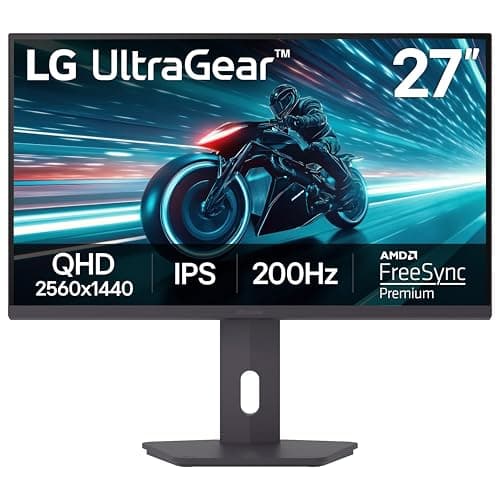
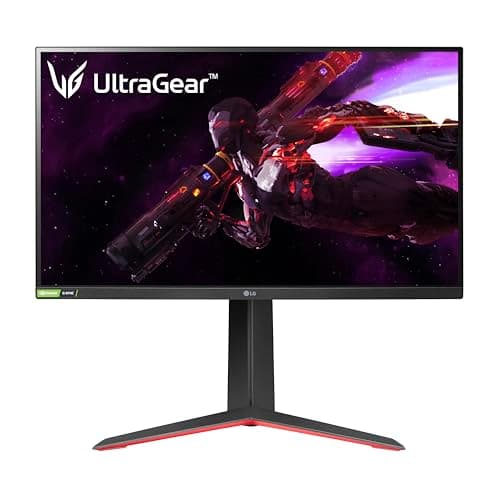
The 27GS75Qtakes the top spot because it is the most complete package for the money: 1440p IPS, 180Hz, and — unusually at this price — a properly adjustable tilt, height and pivot stand that cheaper panels almost always drop first. It is certified for both G-SYNC Compatible and FreeSync, so variable refresh works whatever card you run. The honest cons are small: the HDR10 badge is nominal with no local dimming, and the headline 200Hz is an overclock, so you are really buying a very good 180Hz panel. Do not buy it if your graphics card is entry-level — 1440p at 180Hz is a lot of pixels to feed, and a weaker card will leave most of those frames on the table.

The 27GP850is the sensible step to the side: a Nano IPS panel with excellent colour and viewing angles, 165Hz (overclockable to 180Hz), and a price that sits well under the others, freeing money for a mouse, headset or keyboard. It is the reliable choice rather than the showpiece — its IPS blacks are grey next to the OLED, and its HDR is nominal — but for a fast, accurate, no-drama screen it is hard to fault. If dark-room contrast is your priority, it is the wrong pick and you should stretch to the OLED.

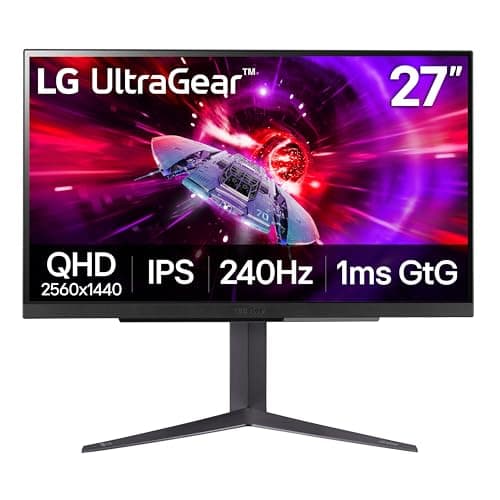
The 27GR83Qearns its place for a specific buyer: it pairs 240Hz IPS for the PC with HDMI 2.1 for a PS5 or Xbox Series X, so it is the do-it-all screen when a console shares the desk. Its DisplayHDR 400 is entry-level HDR, better than a bare sticker but nowhere near the AOC mini-LED, and it is the most expensive of the LCDs here — part of that money buys HDMI 2.1 that a PC-only player on DisplayPort will never touch. If you only game on a PC, skip it: the Q27G41ZE gives you the same 240Hz and sharpness for meaningfully less.

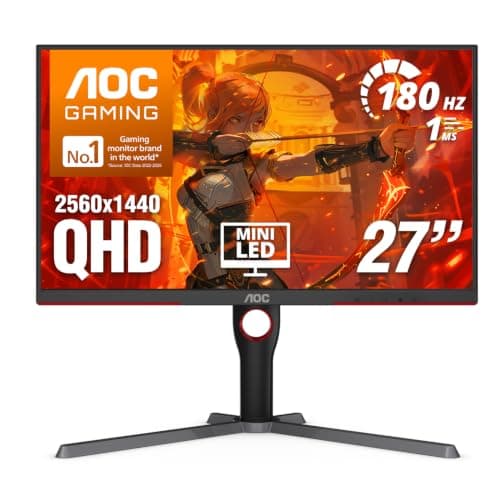
The Q27G3XMNis the outlier and the connoisseur's pick: the only monitor here with real HDR, thanks to its mini-LED backlight and DisplayHDR 1000 rating. Its VA contrast plus mini-LED zones produce the deepest blacks on the page by a wide margin, and it still games well at 180Hz beyond the HDR party trick. Be clear-eyed about the trade-offs: mini-LED blooming (a faint halo around bright objects on a dark background) is visible as it is on every backlight near this price, it has only one HDMI 2.0 and one DisplayPort, and VA smear on dark, fast transitions means it is not the panel for a competitive-shooter main. Buy it for immersive, HDR-forward single-player games; skip it if you live in SDR shooters.

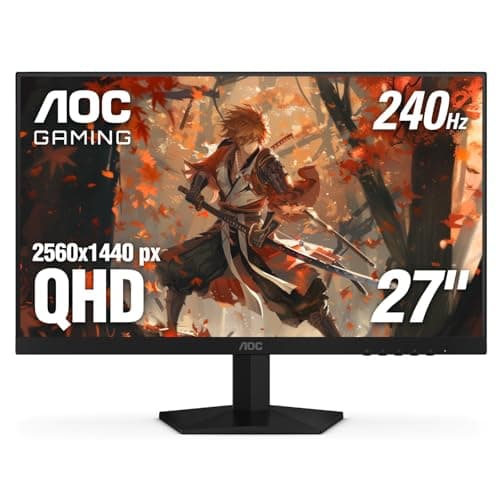
The Q27G41ZEis the frames-per-dollar pick: 240Hz and 1440p together for the least money on the page, with a 0.3ms rated response, G-SYNC Compatible support and an unusually generous three-year zero-bright-dot warranty. The honest cons are firm — its “HDR Ready” label means it accepts an HDR signal, not that it shows real HDR, so treat it as an SDR monitor; it is HDMI 2.0 only, so 240Hz is DisplayPort-only and a console is capped at 60Hz; and 240Hz at 1440p is a heavy GPU ask that most cards will not sustain in modern titles. If you play story-driven or graphically heavy games, that refresh rate is dead weight and a 180Hz panel with a better stand is the smarter buy.

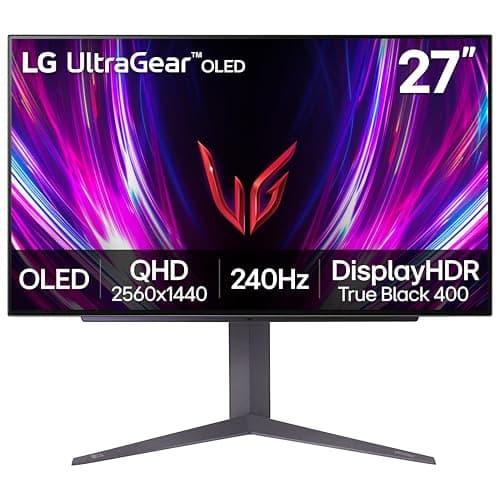
The 27GS93QE OLEDsits last only because it is the priciest, not because it is the weakest — on pure image quality it is the best on the page. Its per-pixel blacks and colour go beyond anything an IPS or VA panel here can approach, and 240Hz with near-instant pixel response makes fast motion genuinely clearer rather than merely higher-numbered. It is the single biggest “wow” upgrade you can make to a desk in this class. The catches are real: it eats the whole budget, it carries a burn-in risk with static HUDs and taskbars over years of use, and its full-screen brightness is lower than a bright LCD, so a sun-blasted room is not ideal. If you leave static UI on screen for hours daily or game in bright light, a high-refresh IPS like the 27GP850 sidesteps that worry and gets brighter.

Match the monitor to your graphics card, not your wish list

The one mistake to avoid is buying more refresh rate than your PC can feed. A 240Hz panel driven at 90fps is not doing anything a 165Hz panel would not have done for less money. Be honest about the frame rates your graphics card actually hits in the games you play, and buy the refresh rate that matches — then spend the difference on panel quality, a better stand, or real HDR, which you will notice every day. Since every panel here is 27-inch 1440p, you can shop this list purely on panel type, refresh rate and HDR and land on the right screen. If you would rather browse the same class of panel framed a different way, our best 1440p monitors page lines the field up by resolution, the best 240Hz monitors page filters for pure speed, and if you decide the sharper image is worth the graphics-card tax, the best 4K monitors are the next rung up.
The short answer

Quick picks

#ProductBest forScorePrice
01
LG LG UltraGear 27GS75Q-B
LG UltraGear 27GS75Q-B

The one to buy. 1440p, IPS, 180Hz and a stand that actually adjusts — the complete package for the money.

The best all-round pick
8.6
$179.99Amazon
02
LG LG UltraGear 27GP850-B
LG UltraGear 27GP850-B

The sensible high-refresh IPS pick. Fast, colour-accurate, and it leaves money in the budget for the rest of your setup.

Best sensible high-refresh
8.2
$359.99Amazon
03
LG LG UltraGear 27GR83Q-B
LG UltraGear 27GR83Q-B

The do-it-all pick. 240Hz IPS for the PC, HDMI 2.1 for a current console, and a stand that does everything.

PS5 / Xbox + PC
8.4
$299.99Amazon
04
AOC AOC Q27G3XMN
AOC Q27G3XMN

The only monitor here with real HDR. A mini-LED backlight and a 1,000-nit peak give you HDR that actually does something.

Real HDR
7.8
$229.99Amazon
05
AOC AOC Q27G41ZE
AOC Q27G41ZE

240Hz and 1440p together for under $200 — the most frames per dollar on the page, if your GPU can feed them.

Competitive play / most Hz
7.4
$169.99Amazon
06
LG LG UltraGear 27GS93QE OLED
LG UltraGear 27GS93QE OLED

OLED at the very top of this budget. Once you've seen the black levels and the motion clarity, IPS looks broken.

Best in class
8.4
$499.99Amazon

#ad · Live prices from the Amazon Product API, as of Jul 31, 2026. Where we have no verified live price, we show none — we would rather leave a gap than print a number that has rotted.

In detail

The picks, in full

01
LG LG UltraGear 27GS75Q-B

The best all-round pick

LG UltraGear 27GS75Q-B

27"2560x1440 IPSLG rates 180Hz (OC 200Hz) / 1msHeight/pivot stand
8.6/10

The one to buy. 1440p, IPS, 180Hz and a stand that actually adjusts — the complete package for the money.

Panel quality
9
Build quality
8
Ergonomics
9
Features
8
Value
9

Pros

  • 1440p IPS at 180Hz is the configuration most people should own, and LG tunes its panels a clear step above the no-name competition
  • A tilt/height/pivot stand — the ergonomic adjustment budget monitors almost always delete to hit a price
  • Certified for both NVIDIA G-SYNC Compatible and AMD FreeSync, so variable refresh works whatever card you run

Cons

  • The HDR10 badge is nominal — no local dimming, so it is SDR with a wider input range, not real HDR
  • The 200Hz is an overclock; you are really buying a very good 180Hz panel

Don't buy this if…

your graphics card is entry-level. 1440p at 180Hz is a lot of pixels to feed, and an older or budget GPU will leave most of those frames on the table — a 1080p panel from our under-$200 guide is the smarter buy until you upgrade it.

$179.99View on Amazon

Price as of Jul 31, 2026. Prices change — Amazon's is the one that counts.

#ad · we may earn a commission from this link to LG UltraGear 27GS75Q-B

02
LG LG UltraGear 27GP850-B

Best sensible high-refresh

LG UltraGear 27GP850-B

27"2560x1440 Nano IPSLG rates 165Hz (180 OC) / 1msG-Sync compatible
8.2/10

The sensible high-refresh IPS pick. Fast, colour-accurate, and it leaves money in the budget for the rest of your setup.

Panel quality
8
Build quality
8
Ergonomics
8
Features
8
Value
9

Pros

  • Nano IPS colour and viewing angles with a genuinely fast response for an LCD
  • 165Hz (overclockable) with variable refresh, so competitive play stays smooth and tear-free
  • Costs well under the budget cap, freeing money for a mouse, headset or keyboard

Cons

  • IPS blacks are grey next to the OLED — in a dark room the difference is obvious
  • HDR is nominal; there's no meaningful local dimming
  • Nothing about it is exciting — it's the reliable choice, not the showpiece

Don't buy this if…

contrast and dark-room punch matter most to you. IPS can't match OLED blacks — if that's the priority, stretch to the 27GS93QE.

$359.99View on Amazon

Price as of Jul 31, 2026. Prices change — Amazon's is the one that counts.

#ad · we may earn a commission from this link to LG UltraGear 27GP850-B

03
LG LG UltraGear 27GR83Q-B

PS5 / Xbox + PC

LG UltraGear 27GR83Q-B

27"2560x1440 IPSLG rates 240Hz / 1msHDMI 2.1 · DisplayHDR 400
8.4/10

The do-it-all pick. 240Hz IPS for the PC, HDMI 2.1 for a current console, and a stand that does everything.

Panel quality
9
Build quality
8
Ergonomics
9
Features
9
Value
7

Pros

  • HDMI 2.1 is the real differentiator — a PS5 or Xbox Series X can run 1440p at 120Hz here, which none of the HDMI 2.0 monitors on this page can deliver
  • 240Hz IPS covers the competitive-PC side with no compromise
  • Full tilt/height/pivot stand and LG's better factory calibration

Cons

  • DisplayHDR 400 is entry-level HDR — better than a bare HDR10 sticker, but nowhere near the mini-LED AOC's real HDR
  • The most expensive monitor here, and part of that money buys HDMI 2.1 that a PC-only player on DisplayPort will never use

Don't buy this if…

you only ever game on a PC. The HDMI 2.1 headline is wasted over DisplayPort, and the AOC Q27G41ZE gives you the same 240Hz and sharpness for over a hundred dollars less.

$299.99View on Amazon

$499.9940% off

Price as of Jul 31, 2026. Prices change — Amazon's is the one that counts.

#ad · we may earn a commission from this link to LG UltraGear 27GR83Q-B

04
AOC AOC Q27G3XMN

Real HDR

AOC Q27G3XMN

27"2560x1440 VAMini-LED · HDR 1000AOC rates 180Hz / 1ms
7.8/10

The only monitor here with real HDR. A mini-LED backlight and a 1,000-nit peak give you HDR that actually does something.

Panel quality
9
Build quality
7
Ergonomics
6
Features
9
Value
8

Pros

  • Mini-LED local dimming with a DisplayHDR 1000 rating is genuine HDR — bright highlights that pop against blacks that stay black, which no edge-lit HDR10 panel here can manage
  • VA contrast plus mini-LED zones produces the deepest blacks on this page by a wide margin
  • 180Hz and Adaptive Sync, so it games well beyond the HDR party trick

Cons

  • Mini-LED blooming — a faint halo around bright objects on a dark background — is visible, as it is on every backlight near this price
  • One HDMI 2.0 and one DisplayPort only; a thin selection of inputs if you juggle several devices
  • VA smear on dark, fast transitions applies here too — it is not the panel for a competitive-shooter main

Don't buy this if…

you mostly play competitive shooters in SDR. You would be paying a premium for an HDR panel and VA response times you will not use — the fast IPS AOC Q27G41ZE serves that far better.

$229.99View on Amazon

$299.9923% off

Price as of Jul 31, 2026. Prices change — Amazon's is the one that counts.

#ad · we may earn a commission from this link to AOC Q27G3XMN

05
AOC AOC Q27G41ZE

Competitive play / most Hz

AOC Q27G41ZE

27"2560x1440 IPSAOC rates 240Hz (OC 260Hz) / 0.3msAdaptive Sync
7.4/10

240Hz and 1440p together for under $200 — the most frames per dollar on the page, if your GPU can feed them.

Panel quality
8
Build quality
7
Ergonomics
5
Features
8
Value
9

Pros

  • 240Hz on an IPS 1440p panel at this price would have cost flagship money two years ago
  • G-SYNC Compatible with a 0.3ms rated response, aimed squarely at fast shooters
  • AOC's 3-year zero-bright-dot panel warranty is unusually generous for the money

Cons

  • 'HDR Ready' means it accepts an HDR signal, not that it displays real HDR — treat it as an SDR monitor
  • Only HDMI 2.0, so 240Hz is DisplayPort-only and a PS5 / Series X is capped at 60Hz on this screen
  • 240Hz at 1440p is a heavy GPU ask — you need frames in the 200s to use it, and most cards will not hit that in modern titles

Don't buy this if…

you play story-driven or graphically heavy games. The 240Hz is dead weight unless you are pushing competitive shooters at very high frame rates — you would get a better stand and the same sharpness from a 180Hz panel instead.

$169.99View on Amazon

Price as of Jul 31, 2026. Prices change — Amazon's is the one that counts.

#ad · we may earn a commission from this link to AOC Q27G41ZE

06
LG LG UltraGear 27GS93QE OLED

Best in class

LG UltraGear 27GS93QE OLED

27" OLED2560x1440LG rates 240Hz / 0.03msHDR
8.4/10

OLED at the very top of this budget. Once you've seen the black levels and the motion clarity, IPS looks broken.

Panel quality
10
Build quality
8
Ergonomics
8
Features
9
Value
7

Pros

  • Per-pixel OLED black levels and colour that no IPS or VA panel on any cheaper page can approach
  • 240Hz with near-instant pixel response makes fast motion genuinely clearer, not just higher-numbered
  • The single biggest 'wow' upgrade you can make to a desk under $500

Cons

  • It eats the whole budget — there is nothing left for anything else
  • OLED carries a burn-in risk with static HUDs and taskbars over years of use; mind the care features
  • Full-screen brightness is lower than a bright LCD, so a sun-blasted room isn't ideal

Don't buy this if…

you leave static UI on screen for hours daily, or you play in a bright room. A high-refresh IPS like the 27GP850 sidesteps burn-in worry and gets brighter.

$499.99View on Amazon

$899.9944% off

Price as of Jul 31, 2026. Prices change — Amazon's is the one that counts.

#ad · we may earn a commission from this link to LG UltraGear 27GS93QE OLED

How we picked

We do not run a testing lab

We researched published specifications, third-party lab measurements, manufacturer documentation and aggregated owner reviews, then scored each product against a published rubric. The scores are judgements from documented research — they are notmeasurements we took, because we do not have a lab and we are not going to pretend we do. Where a number came from someone else's lab, we name them and link them in Sources.

Questions

Frequently asked

Is a 27-inch monitor the best size for gaming?
For most people, yes. 27 inches fills your view at a normal desk distance without making you turn your head to track the edges, and it is the size the gaming-monitor market is built around, so the value and choice are best here. It also pairs naturally with 1440p, which looks crisp at this size while staying far kinder to your graphics card than 4K. Go bigger only if you specifically want an immersive 32-inch or ultrawide screen.
What resolution should a 27-inch gaming monitor be?
1440p (QHD, 2560×1440). At 27 inches that works out to roughly 109 pixels per inch, which looks genuinely sharp at normal viewing distance without the heavy GPU load of native 4K. 1080p stretched over 27 inches starts to look a little soft up close, while 4K on a 27-inch screen adds sharpness but roughly doubles the pixel load your card has to drive. Every monitor on this page is 27-inch 1440p for that reason.
Which 27-inch monitor here actually has real HDR?
The AOC Q27G3XMN. It uses a mini-LED backlight with local dimming and a DisplayHDR 1000 rating, so bright highlights genuinely stand out against blacks that stay black — real HDR that does something. The OLED delivers HDR a different way, through per-pixel light control. The other panels carry nominal HDR badges with no meaningful local dimming, so treat them as excellent SDR monitors that merely accept an HDR signal.
Can these 27-inch monitors run a PS5 or Xbox Series X properly?
Only the LG 27GR83Q has HDMI 2.1, which is what lets a PS5 or Xbox Series X run 1440p at 120Hz. Every other monitor here is HDMI 2.0, which caps a current console at 60Hz at this resolution even though the panel runs much faster from a PC over DisplayPort. If a console shares your desk, the 27GR83Q is the pick; if you only game on a PC, that HDMI 2.1 is a feature you will never use.

Keep reading

Receipts

Sources

We do not run a testing lab, and we do not pretend to. Where a measured number came from someone else's lab, we name them and link them. Where we could not verify something, we say so on the page rather than quietly leaving it out. Read our full method.