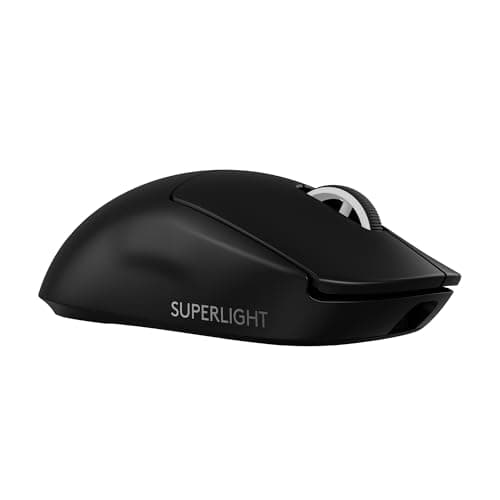
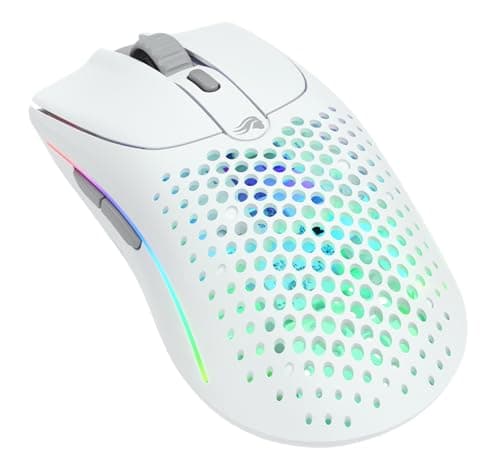
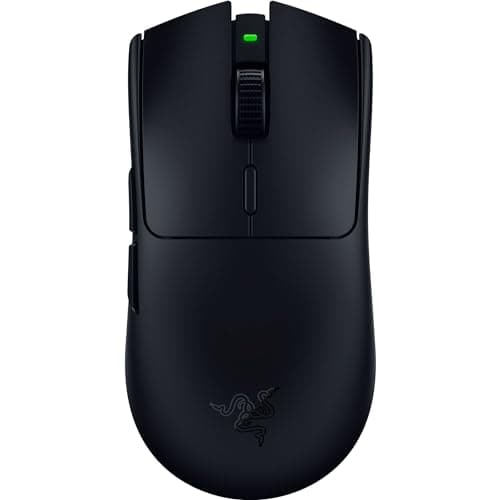
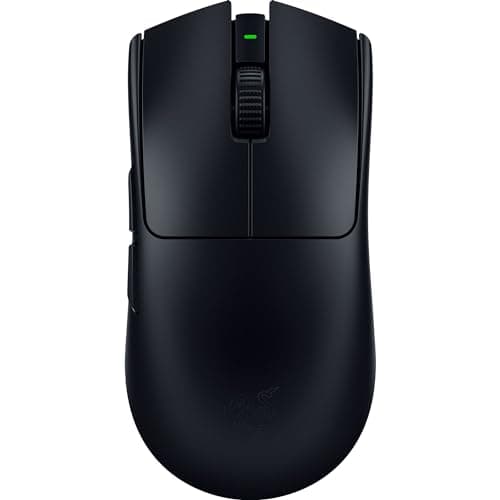
Buy the Razer Viper V3 Pro. It is genuine tournament hardware — roughly 54g, flawless low-latency wireless, and a clean symmetrical shape a huge number of professionals already compete on. For an FPS mouse, that combination of light weight and trusted shape is the whole game. If the shape does not suit you, the Logitech G PRO X Superlight 2 is the other shape half the pro scene uses, and the Glorious Model O 2 Wireless gets you most of the way for markedly less.
Stop shopping for a sensor. It is a solved problem.
The single most useless number in this category is DPI, and it is the number every box shouts loudest. Every mouse on this page tracks perfectly at any speed a human arm can produce. The gap between an 18,000 DPI sensor and a 26,000 DPI sensor is real in a laboratory and invisible in a game — nobody aims at 26,000 DPI, and nobody could if they tried. Once the sensor is good enough, and at this level they are all far past that, the spec sheet has nothing left to tell you that matters. The differences that decide a flick are the ones DPI cannot describe.
This is liberating rather than limiting. It means you can ignore the headline number entirely and spend your attention on the two things that genuinely separate a great FPS mouse from a merely adequate one: how much it weighs, and whether its shape fits your hand and your grip. Get those two right and you have the best mouse for you. Get them wrong and the fanciest sensor in the world will not rescue your aim.
Weight is the property you will feel on every flick
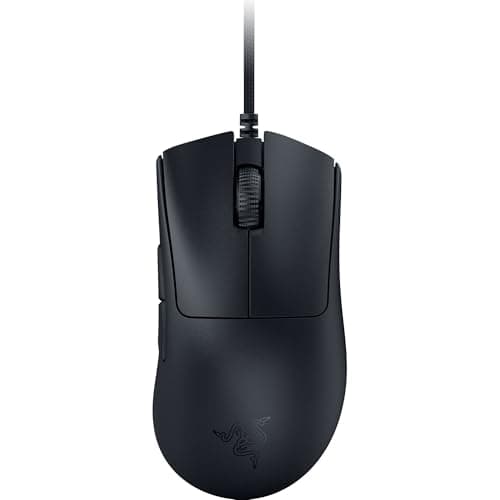
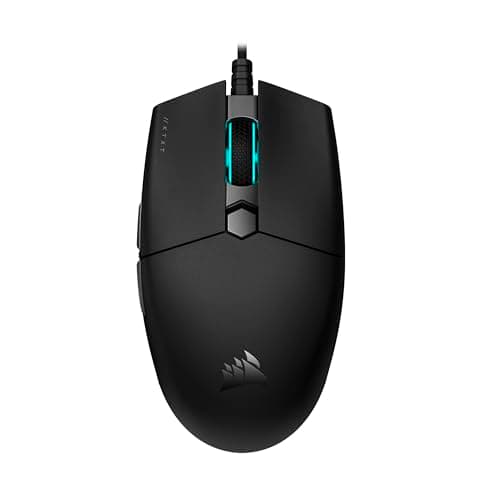
In a flick-aim shooter, weight is the spec you notice most, because you are accelerating and stopping the mouse thousands of times a match. A lighter mouse changes direction with less effort and settles faster when you snap onto a target, which is why the competitive scene has spent years chasing grams. The Viper V3 Pro at around 54g and the Superlight 2 at around 60g are featherweights; the Viper V3 HyperSpeed at 82g and the KATAR PRO XT at 73g are heavier but still light by any normal standard; the DeathAdder V3 at around 59g proves you no longer have to trade comfort for weight the way older ergonomic mice forced you to.
A word of honesty, though: below a certain point, lighter stops helping and starts being a number on a box. The difference between a 54g mouse and a 60g mouse is far smaller than the marketing implies, and neither will out-aim the other in your hand. Light matters; obsessing over the last few grams does not. Buy something light enough that it does not fight your flicks, then stop counting.
Shape is where you actually choose — match it to your grip
Weight narrows the field; shape picks the winner, and shape is personal. There is no best shape, only the shape that fits your hand size and the way you hold a mouse. Get this wrong and a world-class mouse will feel like someone else's.
- Palm griprests the whole hand on the mouse and wants a filled-out back to support the palm. The DeathAdder V3's ergonomic right-handed hump is one of the most universally comfortable palm shapes ever made — if you palm-grip, start there.
- Claw grip arches the fingers and rests the back of the palm, and it likes a neutral, symmetrical body. The Viper V3 Pro, the Superlight 2 and the Model O 2 all suit it.
- Fingertip grip controls the mouse with the fingers alone and wants something small and light. The KATAR PRO XT and the symmetrical featherweights here are the fingertip tools; a big ergonomic hump is the wrong shape for it.
There is a second axis on top of grip: symmetrical versus ergonomic.The Viper, the Superlight 2 and the Model O 2 are symmetrical — neutral shapes that suit the widest range of hands and both claw and fingertip grips. The DeathAdder V3 is a dedicated right-handed ergonomic shape, more comfortable for palm grippers but useless to a left-hander. Neither approach is better; they are answers to different hands.
Wireless is no longer the compromise it used to be
The old rule that competitive players must go wired is out of date. The Viper V3 Pro, the Superlight 2 and the Model O 2 all use modern low-latency 2.4GHz wireless that is, for all practical purposes, as fast as a cable — and losing the cable drag is a genuine improvement in feel, especially for wide, fast aim. What wireless still costs you is a little money and, occasionally, a little weight for the battery. The Viper V3 HyperSpeed shows the trade cleanly: it runs on a single AA cell, which is convenient and keeps it cheap, but that cell is why it is heavier than the rechargeable flagships. The wired KATAR PRO XT and DeathAdder V3, meanwhile, are the value play — a good paracord-style or flexible cable drags far less than the stiff rubber cables of old, and a cheap mouse bungee removes what little remains.
One durability note worth more than its billing: several mice here use optical main switches (the Viper line, the DeathAdder V3), which actuate on a light beam and physically cannot develop the double-click fault that eventually kills a lot of mechanical-switch mice. Nobody advertises this properly, and it is one of the best long-term reasons to pick one.
The ranking is a starting point, not a verdict on your hand
We put the Viper V3 Pro at the top because, for the widest range of hands and grips, it is the best-judged combination of weight, shape and wireless on this page. But a roundup ranking is an average, and your hand is not average. If the Superlight 2's slightly different back suits you better, it is the better mouse for you, full stop, and the same is true right down the list. Read the order here as “try these first,” not as a scoreboard where a lower rank means a worse mouse. The featherweight symmetrical trio — the Viper V3 Pro, the Superlight 2 and the Model O 2 — are close enough that the deciding factor between them is almost always which shell your fingers settle onto, not which one a spec sheet crowns.
This is also why we did not pad the list with a dozen mice. Every option here is one we would put our name to for a shooter, and each covers a distinct need: the ultralight symmetrical flagships for claw and fingertip players, the ergonomic DeathAdder V3 for palm grippers, the AA-powered Viper HyperSpeed as the wireless value pick, and the wired KATAR PRO XT as the lightweight-on-a-budget answer. If none of those shapes fits your hand, that is a real result and worth knowing before you buy — a mouse that does not fit is the one upgrade guaranteed to make your aim worse.
How to actually pick an FPS mouse
Measure your hand first. Seriously.
Take the length from the base of your palm to the tip of your middle finger, and the width across your palm. That single measurement decides more than any spec on the page. Larger hands want a fuller shape like the DeathAdder V3; smaller hands want something compact like the KATAR PRO XT or one of the symmetrical featherweights. A mouse that is too big for your hand forces a bad grip, and a bad grip caps your aim no matter how good the sensor is. Do this before you look at anything else.
Decide your grip, then let it choose the shape
Palm grippers want a hump to support the hand — the DeathAdder V3. Claw grippers want a neutral symmetrical body — the Viper V3 Pro, the Superlight 2 or the Model O 2. Fingertip grippers want small and light — the KATAR or the featherweights. If you do not know your grip, watch your hand on your current mouse for a few minutes: whether your palm touches the back of the shell is most of the answer.
Buy light enough, not the lightest possible
Weight genuinely matters in a shooter — a lighter mouse changes direction and stops with less effort. But the returns fall off a cliff at the bottom of the range. Any mouse on this page is light enough to flick cleanly; the gap between the lightest and the second-lightest is a rounding error in the hand. Pick a mouse that is light enough that it never fights you, and put the energy you would have spent chasing grams into your mousepad and your aim training instead.
Treat wireless as a feel upgrade, not a latency risk
Modern 2.4GHz wireless on the mice here is effectively as fast as a cable, and the loss of cable drag is a real, positive change in how the mouse moves. If your budget stretches, the wireless Viper V3 Pro, Superlight 2 and Model O 2 are the nicer tools to use. If it does not, do not feel cheated by the wired KATAR or DeathAdder — a good flexible cable, or a cheap bungee, gets you most of the way to the same free-feeling movement. We laid out the full trade in our wired vs wireless mouse guide.
Prefer optical switches for the long haul
The double-click fault — where one press registers as two — is the failure that eventually retires most gaming mice. Optical main switches, like those in the Viper line and the DeathAdder V3, cannot develop it, because there are no metal contacts to wear. It is a quiet durability advantage that adds nothing to the price and a lot to the lifespan. If two mice are otherwise a coin-flip for you, let the optical switches break the tie.
Ignore the extras you will never use in a shooter
An FPS mouse wants to be light and it wants to fit your hand. It does not want a bank of a dozen thumb buttons, a tunable weight system, or a sensor rated for a DPI you will never touch. Those are features for other genres, and every one of them adds weight or cost you do not want here. If you also play MMOs or want controls under every finger, that is a different mouse and a different page; for pure FPS, minimal is the point.
Spend the small money on the glide, not the sensor
Once you have a mouse that fits, the cheapest meaningful upgrades left are the surface it slides on and the feet it slides with. A large cloth mousepad does more for your consistency than the difference between any two mice on this page, and a set of aftermarket PTFE skates transforms how a good mouse feels for the price of a coffee. If your hand sweats and the shell gets slick — a real complaint on some of the lighter shells here — a few strips of grip tape fix it completely. None of these are glamorous, and all of them beat spending more on the mouse itself.
What not to pay for
DPI above a few thousand. Polling rates that need a separate dongle and drain the battery to hit a number you cannot perceive. RGB. Weights you will never install. Every one of those exists to differentiate a product on a shelf, not to help you win a duel — the things that do help are weight in the hand, a shape that fits, and switches that outlast the warranty.