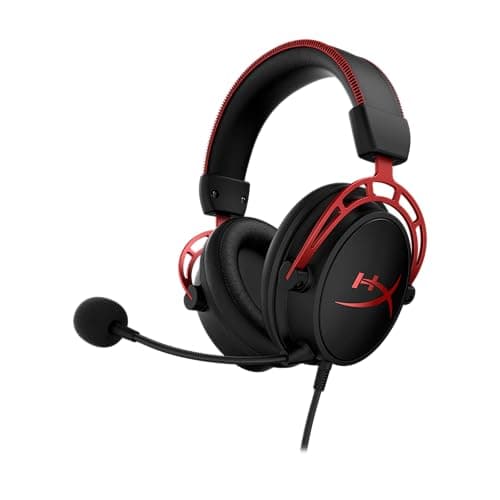
If you want one recommendation and no homework, buy the HyperX Cloud Alpha. It is a comfortable wired headset with a detachable mic and a plain 3.5mm plug, it undercuts almost every wireless option here, and on a PC — where a headphone jack, USB ports and Bluetooth are all sitting there waiting — it gets the fundamentals right and leaves money in the budget for the rest of your setup. A PC is the one platform that puts every connection option on the table at once, which is exactly why the headset question feels harder here than on a console. You are not funneled down a single road: you can run a wired 3.5mm set, a low-latency 2.4GHz dongle, or Bluetooth, and you get software equalization and sidetone on top of whichever you choose. The six picks below are chosen to cover every one of those routes, from a do-everything wired all-rounder to an ultralight wireless pair.
Why the PC is the best place to buy a headset
On a console, the connection is mostly decided for you — you plug into the controller, or you buy the dongle the platform blesses. A PC removes that constraint entirely. It has a 3.5mm jack (on the case, the motherboard, or the front panel), it has USB ports for a 2.4GHz dongle, and it has Bluetooth built into most modern boards and every laptop. That means the headset you pick is a genuine choice about what you value, not a compromise the hardware forced on you.
It also means the PC is where a headset's software actually does something. The companion apps that feel like bloat on a console — parametric equalizers, sidetone sliders, mic noise gates, surround processing — all run natively here, so a headset that leans on its software is worth more on a PC than anywhere else. The flip side is that a good wired headphone with no software at all still works perfectly, because the platform never gets in its way.
The three ways a headset connects to a PC
Before the picks, get the connection decision straight, because it matters more than the badge on the earcup:
- Wired 3.5mm (analogue).The simplest and most universal. It runs off the jack with no drivers and no battery, and the same headset moves to a console, a handheld or a phone without ceremony. The catch is that the sound quality now depends partly on your motherboard's audio, and you get no software surround of its own.
- USB or a 2.4GHz dongle.A USB connection hands the audio to the headset's own processing rather than the motherboard's, which unlocks virtual surround and EQ. A 2.4GHz dongle does the same thing wirelessly, and the latency is low enough that it is not a competitive handicap — this is the wireless standard to buy, not Bluetooth.
- Bluetooth. Convenient for a phone or a laptop on the sofa, but its latency is audible in anything with a gunshot in it. Treat Bluetooth as a bonus for casual listening, never as your primary gaming link.
If that trade-off is the whole question for you, our wired vs wireless guidelays it out in full — but the short version is that a PC is the one place where all three can coexist, so buy for how you actually play rather than for the spec sheet.
Wired or wireless on a PC?
Everywhere else on this site we point out that a plain headphone plus a separate mic beats a gaming headset on sound per pound, and that is still true on a PC. But wireless is the exception the gaming-headset industry has genuinely earned: a 2.4GHz dongle gives you a cable-free desk with no meaningful latency, and the headphone world mostly cannot match that. So the honest split is simple. If you never want to think about batteries and you want the most sound for the money, go wired — our best wired gaming headsets page is the deeper list. If a clear desk is worth paying for, go 2.4GHz wireless, and our best wireless gaming headsets page ranks that field in full.
The microphone is the spec that separates PC headsets
On a PC you are almost certainly talking to teammates on Discord or in-game comms, and this is where a lot of headsets quietly fall down. A proper detachable or retractable boom sits close to your mouth and sounds clear; the built-in beamforming mics on the lightest headsets are noticeably worse, because the pickup is further away and working harder to guess where your voice is. The Cloud Alpha's detachable boom, Razer's super-wideband mic on the BlackShark and the boom on the G PRO X 2 are the standouts here. If your voice is the priority, or you want to run a separate desk mic, our best mics for gaming page is the next stop, and the how to choose a gaming mic guide covers the trade-offs.
Software EQ and sidetone: the PC-only advantages
Two features are worth calling out because they are far more useful on a PC than a console. Software equalization lets you pull down the bass hump most gaming headsets ship with, which is the single cheapest way to make quiet detail easier to hear. Sidetone — piping a little of your own voice back into the cups — stops you shouting when a closed-back headset seals your ears off. Both come from the headset's companion app over USB or a dongle, which is exactly why a software-driven headset earns its keep on this platform. A purely analogue 3.5mm set cannot do either on its own; you would lean on Windows or a third-party equalizer instead.
Footsteps, open-back and the honest ceiling of a gaming headset
If competitive positional audio is your reason for buying, the honest answer is uncomfortable for a page like this: the best tool is usually an open-back headphone with no microphone, not a gaming headset at all. The reason is structural rather than a matter of taste — your brain locates a sound using timing and level cues in two frequency bands, and a sealed cup with a bass-boosted tuning works against both. Whether an open back suits you comes down to your room, not your ears, which we settle in the open back vs closed back guide. Every pick on this page is closed-back, because a PC headset has to double as a mic and a music headphone too — but if you can run a separate mic in a quiet room, read those two guides before you spend. For measured imaging and frequency-response data on any specific model, we point you at RTINGS, who buy the units and measure them properly rather than borrowing the numbers.
Comfort is the spec that outlasts the hype
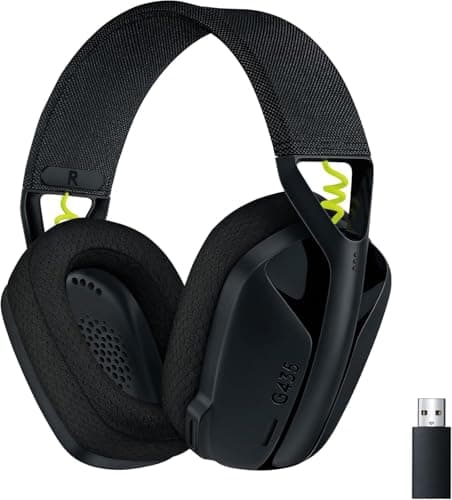
On a PC you sit down for long sessions, and comfort quietly decides which headset you actually keep. Weight, clamp force and pad material matter more over three hours than any driver claim on the box — a headset that pinches or bakes your ears ends the evening early no matter how it sounds. This is where the Cloud Alpha's memory-foam pads and the featherweight G435 earn their keep, and where a heavier flagship can lose you despite the nicer spec sheet. If you wear glasses it matters even more, because the arms of your frames turn a firm clamp into a headache within the hour. It is not a glamorous thing to shop for, but it is the one you feel every single session, and it is the reason two people can rate the same headset completely differently.
Latency, and why 2.4GHz beats Bluetooth
If you go wireless, the radio is the spec that matters, not the drivers. A dedicated 2.4GHz dongle — whether SteelSeries, Razer or Logitech's LIGHTSPEED — is effectively latency-free, so what you hear stays in step with what you see. Bluetooth does not manage that: its delay is small in milliseconds but audible as a disconnect the moment a gun fires or a footstep lands, which is why every wireless pick here leans on a 2.4GHz link and treats Bluetooth as a convenience for music and calls. The happy result on a PC is that cutting the cable no longer costs you anything competitively, provided you buy the right kind of wireless rather than assuming all wireless is equal.
The six picks, ranked
The HyperX Cloud Alphawins because it is the least-compromised way to spend a modest budget. It is comfortable over a long session, its detachable mic is good enough for team comms, and the 3.5mm plug means it works on the PC today and on a console or a handheld tomorrow. The honest con is that it is closed-back, so its soundstage is narrower than any open-back, and the bass-forward tuning can mask quiet detail until you equalize it — both fixable on a PC, neither a dealbreaker.
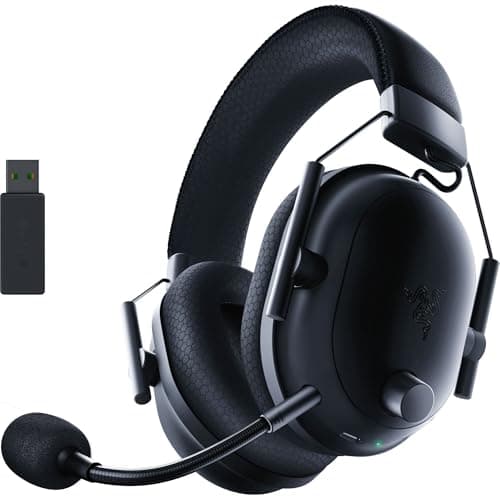
The Razer BlackShark V2 Prois the competitive-shooter pick: light, wireless over 2.4GHz, and tuned hard around the mid-treble where weapon and movement cues live, with the best-sounding wireless mic in its band. The trade is that the same competitive tuning makes music and single-player audio sound thin, and you need Razer's software to change anything meaningful — it is a specialist, and it does not pretend otherwise. The best headsets for FPS page is where it really belongs.
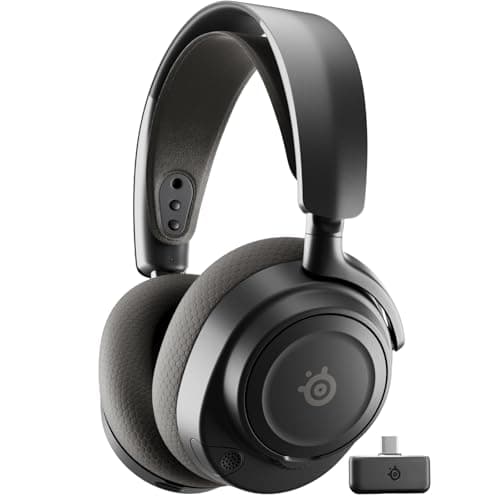
The SteelSeries Arctis Nova 7 is the best all-round wireless choice: a 2.4GHz dongle for the game and Bluetooth at the same time for a phone call, plus a tidy retractable mic. It does the important 90% of the pricier flagships for far less. Its con is that there is no hot-swap battery, so a flat headset means reaching for a cable, and it carries the usual closed-back staging ceiling.
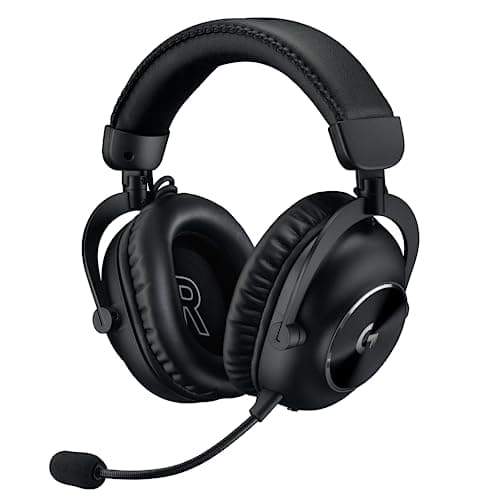
The Logitech G PRO X 2 LIGHTSPEEDis the premium wireless option — a low-latency dongle plus Bluetooth, Logitech's graphene drivers and a genuinely excellent detachable boom. It is the buy-once wireless set for someone who wants the best mic on a wireless headset. The con is the price and the honesty gap: the graphene drivers are a smaller upgrade than the marketing implies, and it is still closed-back, so the Nova 7 does most of its job for meaningfully less.
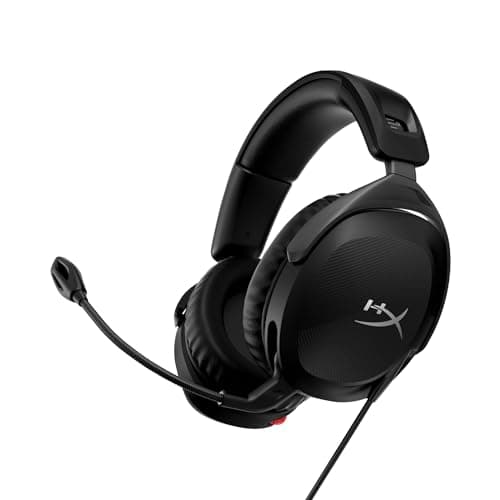
The HyperX Cloud Stinger 2 is the budget wired pick, and the floor of what is worth owning: light, genuinely comfortable, with a swivel-to-mute mic that is slicker than the mute on headsets costing several times more. Its con is that the sound is flat and unremarkable with loose bass, and the all-plastic build with a non-detachable mic is where the savings come from. It is the headline of our best headsets under $50 list for a reason.
The Logitech G435 LIGHTSPEED is the ultralight wireless pick and one of the few headsets that fits a smaller head properly, with both a 2.4GHz dongle and Bluetooth at a genuinely budget price. The compromise is the microphone: its built-in beamforming mics are clearly worse than any boom here, there is no 3.5mm fallback if the battery dies, and the tuning is bass-light. If your teammates need to understand you clearly, that mic is the real cost of everything else it gets right.
Which one is right for you
Treat the list as a few clear lanes. If you want one safe answer, the Cloud Alpha is it. If you play competitive shooters and want wireless, the BlackShark V2 Pro. If you want the best all-round wireless for the money, the Nova 7, stepping up to the G PRO X 2 only if the mic and battery life justify the premium. If price is the whole constraint, the Cloud Stinger 2 wired or the G435 wireless, with eyes open about the mic. And if you are furnishing a whole platform rather than one desk, our sibling pages for the Switch and the under $50 bracket carry the same honest logic to those buyers. Every price here is pulled live and date-stamped, so the recommendation stays true rather than drifting the day after launch.