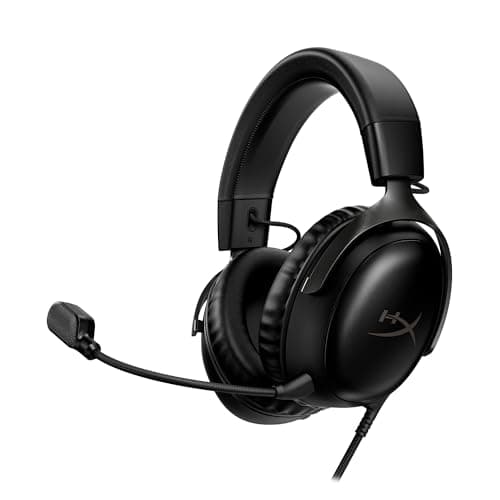
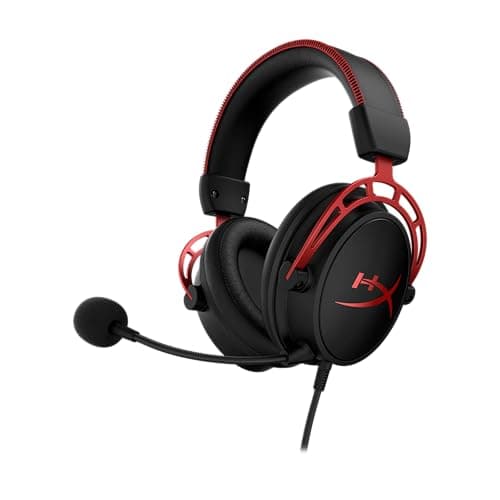
These two headsets get compared constantly because they are the same company’s answer to the same question, several years apart. Both are closed-back, both are wired, both are comfortable enough for long sessions, and both sit in the same price bracket. Neither is a meaningful upgrade over the other in raw sound quality. The real differences are the connection options, the microphone and the driver angle, and the first of those three is the one that should decide your purchase.
The connection: the decision in one paragraph
The Cloud Alpha is a 3.5mm analog headset. It has no digital electronics in the path, which means whatever device you plug it into provides the amplification and the digital-to-analog conversion. On a modern console controller, a Switch, a phone or a handheld, that is exactly what you want, because those devices expect an analog headset.
The Cloud III keeps the analog cable and adds a USB-C and USB-A option. Plugged in over USB, the headset handles the conversion itself and your motherboard’s audio circuitry is out of the loop — which is a real advantage if your PC has noisy onboard audio, because the hiss and the interference whine most people hear on cheap motherboards comes from that circuitry rather than from the headset. Our USB vs 3.5mm guide covers the whole trade-off, including what you lose: a USB headset cannot plug into a controller.
Drivers: dual-chamber against angled
The Alpha’s signature is its dual-chamber driver. HyperX separates the chamber behind the driver into two spaces, one tuned for bass and one for the mids and highs, with the stated aim of keeping low-frequency energy from muddying the mid-range. The mechanism is plausible and the result is a headset with a noticeably clean mid-range for its price.
The Cloud III uses a larger 53mm driver mounted at an angle inside the cup, so it fires towards your ear canal rather than directly across it. Angling drivers is a long-standing technique in headphone design for widening the perceived stage, and it is the one audible difference between these two that most listeners can identify in a blind comparison: the Cloud III sounds slightly more spacious, the Alpha slightly more direct.
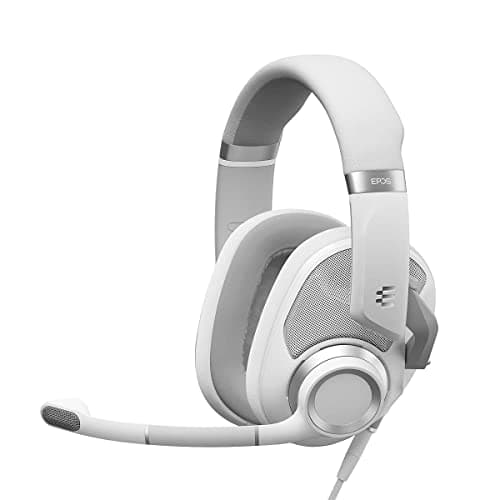
Both are closed-back, which caps how far either gets on positional accuracy. If hearing footsteps is the point, the structural answer is an open-back design, which is why the H6PRO is on this page and why our best headsets for footsteps page leans the way it does. Our open vs closed back guide explains the mechanism.
Microphones: the Cloud III wins
Both have a detachable boom microphone and both are above average for a headset. The Cloud III is the better of the two: HyperX redesigned the capsule for the Cloud III generation, and it picks up more of the body of a voice while sounding less nasal on consonants.
Neither is close to a standalone desk microphone, and that gap is much larger than the gap between these two. If people are going to listen to you for hours — streaming, podcasting or recording — a cheap USB microphone is a bigger improvement than any headset upgrade. Our best microphones for gaming page covers that route, and best headset microphones ranks the headsets whose mics are genuinely good.
Comfort and build
The Alpha uses an aluminium frame with leatherette memory-foam pads; the Cloud III uses memory-foam cushions with a similar frame approach. Both clamp moderately rather than firmly, which is the main reason both get recommended for long sessions.
Leatherette seals better and runs hotter; cloth breathes and leaks slightly more bass. If you wear glasses, firm clamp and thick leatherette is the combination that causes trouble — and that, rather than sound, is the usual reason a headset becomes unbearable after two hours. Our best headsets for glasses page is built around that problem, and making a headset more comfortable covers what you can fix on a headset you already own.
Which one for which platform
PC only, and you talk a lot: Cloud III. The USB option sidesteps bad onboard audio and the microphone is better.
PC plus a console, or a Switch, or a handheld: Cloud Alpha. The 3.5mm cable works everywhere without an adapter, which is the whole point of it. Our PS5 and Switch pages cover the platform-specific cases in more detail.
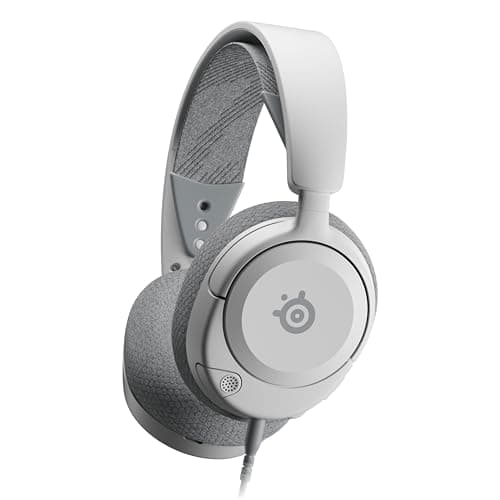
Tightest possible budget: neither. The Arctis Nova 1 delivers most of this sound for less, and our best headsets under $50 page covers that bracket properly.
How we compared these
Scores are judgments from documented research — published specifications from HyperX, independent lab measurements from RTINGS and measurement-led testing at Audio Science Review, plus owner reports — not our own lab measurements. We did not run a frequency sweep on either headset, and our methodology page says so in those words.