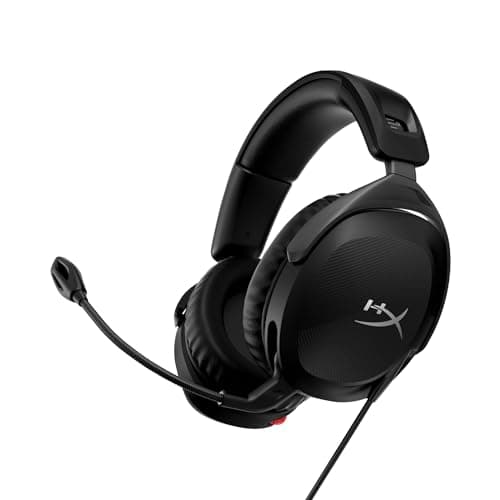
If you want one pick, buy the HyperX Cloud Stinger 2. It is comfortable, it is light, and its swivel-to-mute mic is slicker than the mute switch on headsets costing several times more — the best sub-$50 all-rounder, and the honest floor of what is worth owning. Under $50 is a better place to shop than the marketing would have you believe. It does not buy true wireless or an audiophile driver, but it does buy a genuinely good wiredheadset — if you spend the money on the two things that actually matter at this price and ignore the sticker on the box that promises the world. The five picks below are chosen on comfort and mic clarity, which is where cheap headsets either succeed or quietly fail.
What $50 actually buys
Be honest about the bracket and it becomes easy to shop. Fifty dollars does not buy a low-latency wireless dongle, a hot-swap battery or a graphene driver. What it does buy is a comfortable, durable wired headset with a clear microphone and a 3.5mm plug that works on everything you own. That is not a consolation prize — a well-made wired headset at this price does the core job, carrying your game and your voice cleanly, and it does it without a battery to die or a dongle to lose. The compromises are real, but they are in the places you notice least. The trick, then, is not to hunt for the headset with the longest feature list, but for the one that gets the two or three things that matter genuinely right and does not waste your fifty dollars proving it can do a fourth thing badly. That is a very different shopping list from the one the boxes are designed to sell you, and it is the one that leaves you happy with the purchase months later.
Ignore the fake-surround marketing
The single loudest claim on a budget headset box is some flavor of “7.1 surround”, and it is the claim to care about least. On an analogue 3.5mm headset there is no real multi-driver surround happening — any surround here is a software trick applied by a PC, processing a stereo signal to simulate direction. That processing is a real technique, not snake oil, but it is optional, it only works on a PC, and it is nothing like the headline implies. The Razer Kraken V3 X is the one pick here that genuinely offers it, because it is a USB headset and its virtual surround runs in Razer's PC software; the 3.5mm picks cannot do it on their own and are not worse for it. Do not let a surround sticker decide a sub-$50 purchase — buy on comfort and the mic, and treat surround as a bonus that may or may not suit your ears.
What actually matters at this price: comfort and mic clarity
Two things decide whether a cheap headset is worth keeping. The first is comfort, because you lose more good sessions to a sore head or hot ears than to any spec on the box. Weight, clamp force and pad material are what you are really buying, and it is where the picks here separate: a suspension band or real memory foam is worth more than a bigger number on the driver. The second is mic clarity, because at this price you are almost certainly playing with friends and your voice has to be understood on Discord or in-game. A clear, close boom or flip mic beats a tinny built-in one every time. Sound quality matters too, of course, but every headset here is at least clear and inoffensive — comfort and the mic are where the real differences live.
Where the fifty dollars should actually go
The way to shop this bracket is to decide what you are unwilling to compromise on and let the rest go. Spend on the fit first: a headset you can wear for a full evening without shifting it is worth more than any figure printed on the box. Spend on the mic second, because your teammates hear it constantly and a clear one is the difference between being understood and being asked to repeat yourself. Everything else — a slightly bigger driver, a flashier finish, a surround logo — is a distant third. Get comfort and the mic right and a sub-$50 headset genuinely disappears into your setup, which is exactly what you want from one; get them wrong and no amount of driver marketing rescues it.
Wired is a feature at this price, not a limitation
It is easy to read “wired” as the compromise, but at this budget it is the sensible choice and quietly an advantage. A cable means no battery to die mid-match, no dongle to lose and no charging to remember, and it puts every pound of the price into the parts you actually hear rather than into a radio and a cell. A 3.5mm set also travels between your PC, your console, your handheld and your phone without a second thought. The only real cost is the cable itself, and for most people sitting at a desk or on a sofa that is no cost at all. Save the wireless upgrade for the tier above, where the budget can pay for genuinely good wireless rather than a compromised version of it.
What cheap plastic actually costs you
Every headset here is mostly plastic, and it is worth being clear-eyed about what that means rather than glossing over it. Plastic builds creak when you flex them, hinges are the first thing to fail, and a set left on the floor will not survive a chair rolling over it. That is the real trade at this price, and it is a fair one — you are paying for the sound and the mic, not for a metal frame. Treat a budget headset with a little care and it lasts for years; abuse it the way a pricey aluminum set can shrug off and it will not. None of the picks here is fragile, but none is armoured either, and setting that expectation up front is what keeps you happy with the purchase a year later.
Drivers and “gaming” tuning: the numbers to ignore
Budget boxes love to shout driver diameters and frequency ranges, and both are close to useless for choosing between headsets at this price. A bigger driver is not automatically a better one, and the frequency-range figures printed on cheap headsets are marketing rather than a measured promise of how anything sounds. What actually shapes what you hear is the tuning, and most budget headsets tune bass-forward because a big low end feels exciting in a quick demo. That is fun, but it slightly muddies the quiet positional detail a competitive player listens for — a real trade rather than a defect. If hearing footsteps over booms is your priority, why you can't hear footsteps is the honest read; at this price, simply do not let a spec number make the decision for you.
The honest compromises at this price
No page worth reading pretends a sub-$50 headset is a premium one, so here is what you give up. The builds are plainer and mostly plastic, so they creak and they will not survive being sat on. There is no true low-latency wireless — a cheap Bluetooth headset exists, but its latency makes it a poor gaming choice, which is why every pick here is wired. Some mics are fixed rather than detachable, so the headset is less useful out of the house. And the sound, while clear, is rarely exciting — you are buying competent, not remarkable. None of that stops these being genuinely good headsets; it just means knowing where the money went.
The five picks, ranked
The HyperX Cloud Stinger 2wins because it nails the two things that matter: it is comfortable and light, and its swivel-to-mute mic is a better, more reliable mute than most premium headsets manage. The 3.5mm plug works everywhere. Its con is the sound — flat and unremarkable with loose bass — and an all-plastic build with a non-detachable mic; but for the money, that is a fair set of trades for genuine comfort and a working mic.
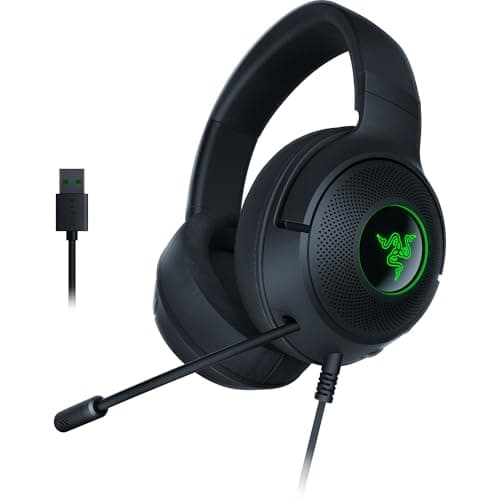
The Razer Kraken V3 Xis the pick if you are on a PC and want the extra positional processing, because it is a light USB headset whose virtual surround runs in Razer's software. Its con is that USB ties it mostly to PC and PlayStation — there is no easy plug into an Xbox or a Switch dock — the virtual surround is a software trick you should treat as optional, and the build feels its budget price.
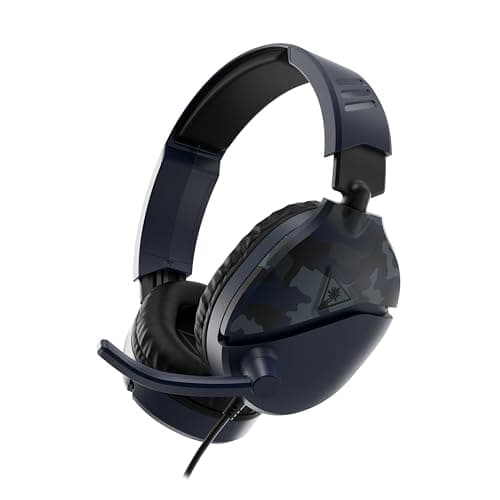
The Turtle Beach Recon 70is the cheap multiplatform all-rounder: one 3.5mm plug for every console, PC and mobile, with a flip-up mic that mutes when raised. Its con is that the all-plastic build creaks and the bass-forward tuning muddies fine positional detail — it is tuned for fun, not for competitive clarity, which at this price is an honest choice.
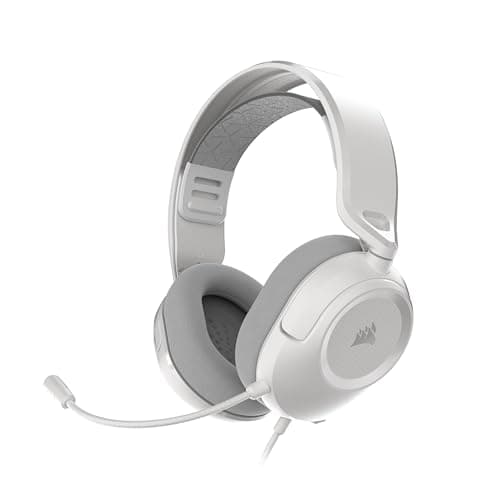
The Corsair HS35 v3is the plug-into-anything pick: a single 3.5mm jack for every platform, memory-foam pads that punch above the price, and a detachable mic so it doubles as ordinary headphones. Its con is that being analogue it has no software surround or equalizer of its own, and the sound is clear but unremarkable — a functional headset rather than a thrilling one.
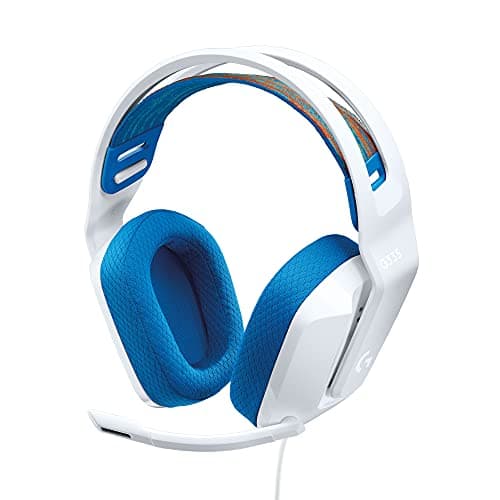
The Logitech G335 is the comfort-and-style pick: the lightest and cleanest-looking set here, with a fabric suspension band that spreads the weight so long sessions barely register. Its con is a gentle clamp that a bigger head may find too loose, analogue-only connectivity with no software surround, and a balanced-but-not-especially-detailed sound. If comfort is your top priority, it is the one to reach for.
How this page differs from the cheap and under-$100 lists
This bracket sits deliberately between two others. Below it, our best cheap gaming headsetspage goes deeper into the true-budget floor, where the compromises get sharper and the goal is simply “the cheapest thing worth owning.” Above it, the best gaming headsets under $100page is a clear tier up, where the money starts buying better drivers, a first taste of good wireless, and nicer builds. Under $50 is the sweet spot for a wired headset that is genuinely good rather than merely tolerable — and if you already know you want a cable regardless of budget, our best wired gaming headsets page spans the whole range. Whichever way you go, our how to choose a gaming headset guide keeps you honest about which specs actually matter.
One last option worth a thought before you spend: at this price a good pair of gaming earbudsplus a clip-on mic can out-resolve a cheap headset and disappear in a pocket, if in-ear fit suits you. Whatever you choose, every price here is pulled live and date-stamped, so the “under $50” promise stays true rather than drifting the day after we publish.